Prime Minister Carney Affirms Liberal MP Michael Ma's Caucus Status Following Controversial Remarks
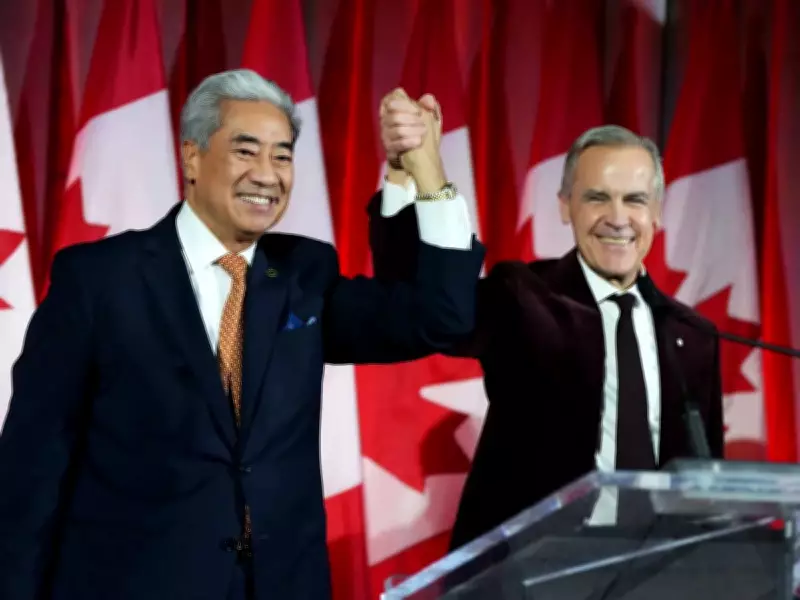
Prime Minister Mark Carney has confirmed that Liberal Member of Parliament Michael Ma continues to be a member of the party's caucus, despite recent controversial comments regarding forced labor allegations in China. This announcement came during a housing and infrastructure event in Toronto, where Carney addressed the situation directly.
Apology Accepted, Caucus Membership Maintained
"Mr. Ma has apologized for his comments and directly and unequivocally recognized the seriousness of the issue, continues to be a member of our caucus, and I'll continue to work with him," Carney stated firmly. The prime minister's remarks followed Ma's public apology issued last Thursday evening, though the MP did not specifically address reports of forced labor in China within his statement.
The controversy originated during a House of Commons industry committee meeting when retired senior bureaucrat Margaret McCuaig-Johnston referenced a 2024 Human Rights Watch report. This document alleged that "dozens of parts in each Chinese EV are made with aluminium from Uyghur forced labor." In response, Ma questioned McCuaig-Johnston's claims, asking "have you witnessed this yourself?"

Global Evidence of Forced Labor Practices
When pressed by reporters about whether he believes forced labor exists in China, Carney provided a measured response. "I followed this issue over the years in China and elsewhere, and there is evidence of child labor around the world," the prime minister explained. He emphasized that Canadian companies must comply with laws prohibiting forced or child labor in any element of supply chains for goods imported into Canada.
Carney added a crucial qualification: "There are parts of China that are higher risk and therefore need to be diligence." This acknowledgment comes amid ongoing international scrutiny of labor practices in specific regions of China.
International Context and Historical Recognition
The discussion occurs against a backdrop of significant international concern. United Nations experts have repeatedly expressed deep apprehension regarding persistent allegations of forced labor affecting Uyghur, Kazakh, and Kyrgyz minority groups, as well as Tibetans within the Xinjiang Uyghur Autonomous Region and other Chinese territories.
In 2021, the House of Commons unanimously adopted a motion recognizing the People's Republic of China's genocide against Uyghurs and other Turkic Muslim groups. This historical context adds weight to current discussions about labor practices and human rights.
Trade Implications and International Investigations
The forced labor issue carries substantial trade implications. Following the U.S. Supreme Court's decision to strike down tariffs under the International Emergency Economic Powers Act, United States Trade Representative Jamieson Greer has launched investigations into 60 economies under Section 301(b) of the U.S. Trade Act of 1974. These investigations, which include Canada, aim to determine whether countries have failed to impose or enforce bans on imports produced with forced labor.
Meanwhile, Finance Minister François-Philippe Champagne is scheduled to travel to China this week, following up on Carney's January visit to Beijing. That trip marked the first visit by a Canadian prime minister in eight years and resulted in a significant trade agreement.
Recent Trade Agreement Between Canada and China
During his January visit, Carney negotiated a deal permitting 49,000 Chinese electric vehicles to be imported into Canada annually at a tariff rate of 6.1 percent. In exchange, China agreed to lower tariffs on Canadian canola exports. This agreement highlights the complex balance between economic interests and human rights considerations in international relations.
The prime minister's handling of the Ma situation demonstrates the delicate political navigation required when addressing sensitive international issues while maintaining party unity and diplomatic relationships.