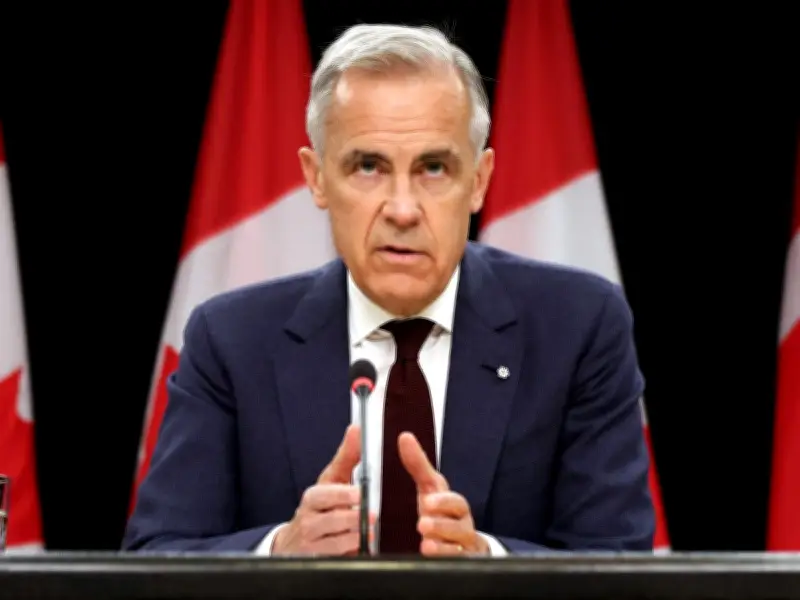
Canadian Prime Minister Mark Carney on Thursday attempted to distance himself from a controversial plan to purchase and convert up to 2,500 unsold condos in Vancouver, signaling a potential retreat from a policy he had enthusiastically endorsed just a week earlier. At a press conference marking the end of the parliamentary session, Carney characterized the initiative as primarily a provincial effort, with federal funding capped at roughly 10% of the total cost.
Carney Backtracks on Vancouver Condo Plan
The prime minister stated that the idea originated with the government of British Columbia and that Ottawa's contribution would be limited to about 10% of the project's $1.4-billion price tag. This represents a significant shift from his previous stance, when he stood alongside B.C. Premier Dave Eby and voiced strong support for the federal government's involvement in buying distressed condos from developers struggling to sell them.
Last week, Carney argued that developers were unwilling to sell at a loss but could not afford to hold empty units indefinitely, and that the condo glut was discouraging new construction and freezing the housing market. The plan was immediately seized upon by Opposition Leader Pierre Poilievre, who dubbed it the "Carney condo bailout" and characterized it as a transfer of wealth from "elites and insiders" to embattled taxpayers.

Political Fallout and Damage Control
Carney's advisers apparently warned him of the political risk posed by the issue, prompting the prime minister to recalibrate his message. On Thursday, he admitted to a poor rollout of the policy and downplayed his earlier comments about developers being stuck with unsold inventory. "We start, as we always do, with Canadians. We don't start with developers," Carney said, when asked whether developers who attended a Liberal fundraiser had lobbied for the bailout.
The prime minister emphasized that the federal government's exposure is limited and that the goal is to help families, not developers. "There are so many cases, young families, of people who don't have money for a down payment, but who can build that equity over time through rent-to-buy. There's an opportunity there," he said. Carney noted that the federal share would amount to $145 million.
Critics Question Moral Hazard
Despite Carney's caveats, critics argue that any federal funding constitutes a moral hazard, privatizing gains while socializing losses. The average size of the condos in question is reportedly around 500 square feet, a fraction of the typical Canadian family home of approximately 2,000 square feet. This has raised questions about the suitability of the units for families.
Political analyst John Ivison, in a column for the National Post, wrote that Carney's manoeuvre amounted to "dropping it but not wanting to admit it in public." Ivison noted that the correct federal contribution should be zero per cent to avoid the appearance of a bailout.
The controversy underscores the delicate balance Carney must strike as he navigates housing policy while fending off accusations of favouritism toward developers. The prime minister's shift in tone suggests the Liberal government is wary of the issue sticking as a political liability.