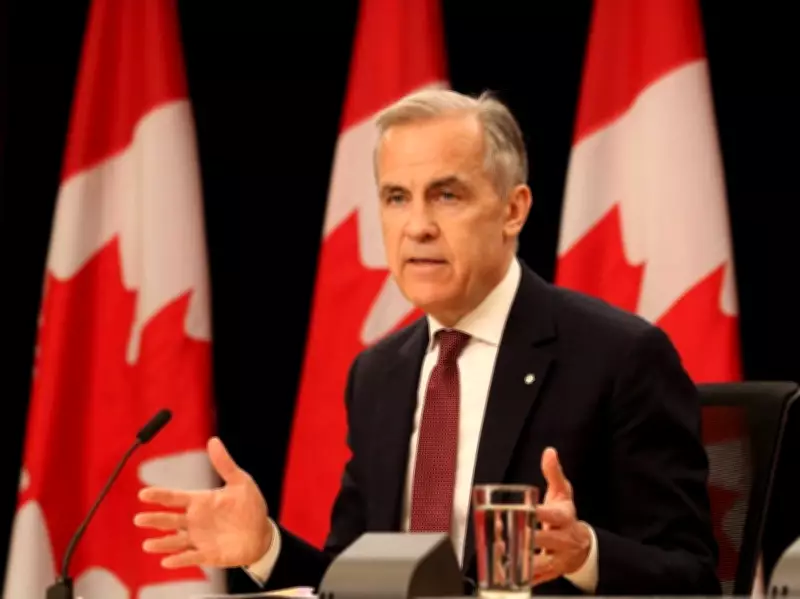
In the realm of Canadian politics, few things are as perplexing or ultimately meaningless to the average taxpayer as a government announcing a 10-year plan. This is precisely why Prime Minister Mark Carney continues to employ this tactic, according to critics who argue such long-term strategies are inherently unreliable and speculative.
The Illusion of Long-Term Planning
Ten-year plans provide governments with extensive runway before they must deliver tangible results, creating an illusion of forward-thinking governance while deferring accountability. As political commentator Lorrie Goldstein notes, these plans are vulnerable to future events over which governments have no knowledge or control, making them as unreliable as decade-long deficit projections.
Historical Precedents of Failed Long-Term Visions
The fundamental flaw in 10-year planning becomes evident when examining recent history. A government announcing an economic plan in 2015 had no foresight of the devastating 2020 pandemic that would reshape the global economy. Similarly, former Prime Minister Justin Trudeau's 2021 announcement of a 10-year, $200-billion-plus plan to reduce Canada's industrial greenhouse gas emissions by 40-45% below 2005 levels by 2030 was dismissed by Carney himself as unachievable during a year-end CBC interview.

Carney's Ambitious but Speculative Promises
Prime Minister Carney has unveiled several sweeping 10-year initiatives that critics argue rely on optimistic assumptions and speculative projections:
Defense Industrial Strategy
In his recent defense industrial strategy announcement, Carney promised 125,000 new jobs over the next decade, a 50% increase in defense exports, raising Canadian firm participation in defense acquisitions to 70%, growing defense industry revenues by 240%, and improving fleet serviceability across maritime, land, and aerospace sectors. While praised in principle by the defense sector, industry leaders noted the real test will be implementation specifics, which remain unclear.
Trade Expansion Goals
Carney's October announcement of a plan to double Canada's non-U.S. exports with a $300-billion trade increase faces significant implementation challenges. Even if perfectly executed, this strategy would still leave the United States as Canada's dominant export market, given that 75% of current exports flow southward.
Housing Construction Targets
During last year's federal election, Carney promised to double Canada's residential construction rate to 500,000 homes annually over the next decade. However, a December parliamentary budget office report revealed that Build Canada Homes, the lead agency for this initiative, is projected to construct only 26,000 housing units over five years, with half designated as affordable housing.
The Private Sector Reality Check
The ultimate test for Carney's housing promise, like many government initiatives, depends on private sector participation. As Goldstein emphasizes, it's private industry, not government, that actually builds homes. This reality underscores the speculative nature of long-term government planning, which often depends on external factors beyond bureaucratic control.
While long-range planning has its place in governance, critics argue that 10-year government plans represent little more than highly speculative projections of a potential future that may never materialize. These plans allow governments to announce impressive-sounding numbers with minimal immediate accountability, creating political theater rather than substantive policy.