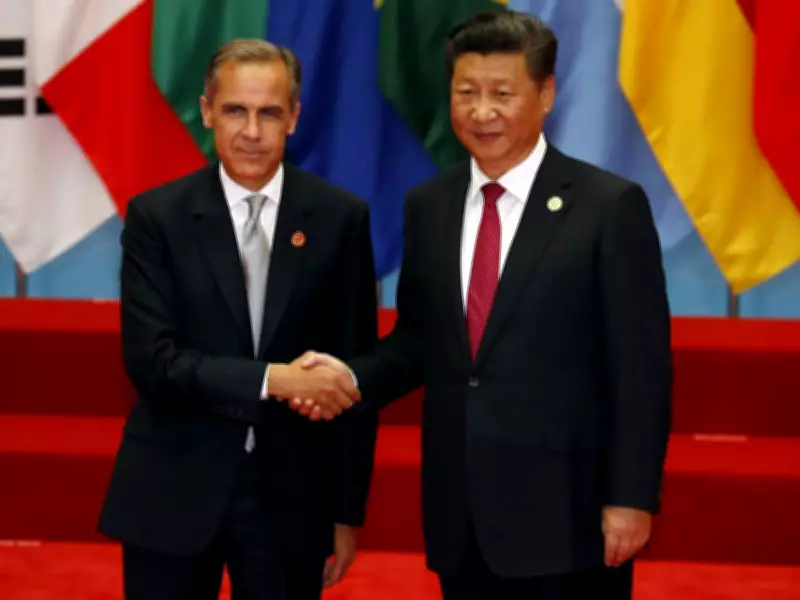
Prime Minister Mark Carney's characterization of China as a "strategic partner" has raised alarms after his government agreed to a secret deal on police cooperation with Beijing. The agreement, announced alongside an EV-canola trade deal in January, has drawn criticism given China's history of foreign interference and human rights abuses.
Details of the Agreement
According to a brief statement from the Prime Minister's Office, Canada and China will pursue "pragmatic and constructive engagement in public safety and security." Law enforcement agencies will increase cooperation to combat narcotics trafficking, transnational crime, cybercrime, synthetic drugs, and money laundering. However, the full details cannot be disclosed without China's permission.
RCMP Testimony
Senior Deputy RCMP Commissioner Bryan Larkin testified before the Senate Committee on National Finance that the new memorandum of understanding is a "re-enhancement" of prior agreements from 2010, 2014, and 2018. He compared it to agreements with U.S. agencies like the FBI, DEA, and CIA, involving information sharing, joint investigations, and cost-sharing, with specific sections on combating fentanyl smuggling.

Security Concerns
The final report of Canada's foreign interference inquiry identified China as "the most active perpetrator of foreign interference targeting Canada's democratic institutions." The inquiry cited China's attempts to intimidate Canadian politicians, industrial espionage, intellectual property theft, and transnational repression of Canadians of Chinese origin who oppose the Beijing regime.
CSIS Warning
The Canadian Security Intelligence Service's annual report, released Friday, cites China as a continuing security threat targeting the Canadian public, private, and academic sectors. CSIS highlighted a campaign by Chinese military and intelligence services using cover companies to recruit Canadians with access to proprietary or classified information. It also warned of China's intelligence interest in Canada's Arctic and cybersecurity threats, including the Salt Typhoon program that compromised telecommunications firms.
Historical Context
Joint policing investigations between China and Canada have occurred for decades under both Liberal and Conservative governments. However, concerns persist about the fundamental differences between policing in democracies and dictatorships. During Operation Fox Hunt and Operation Sky Net, Chinese investigators were accused of entering Canada illegally, using torture, threatening relatives, and operating unauthorized police stations. Despite China breaking the terms of the agreement, Canada took no further action after a Chinese vice-minister apologized.
Conclusion
The Carney government argues that security concerns can be separated from police cooperation in pursuit of trade. However, critics warn that this approach is dangerously naive, given China's ongoing interference in Canadian affairs. The question remains: how far is the government willing to go in cooperating with China on policing issues to reduce reliance on the U.S.?