Mark Carney's Davos Address Draws Mixed Reactions from Political Spectrum
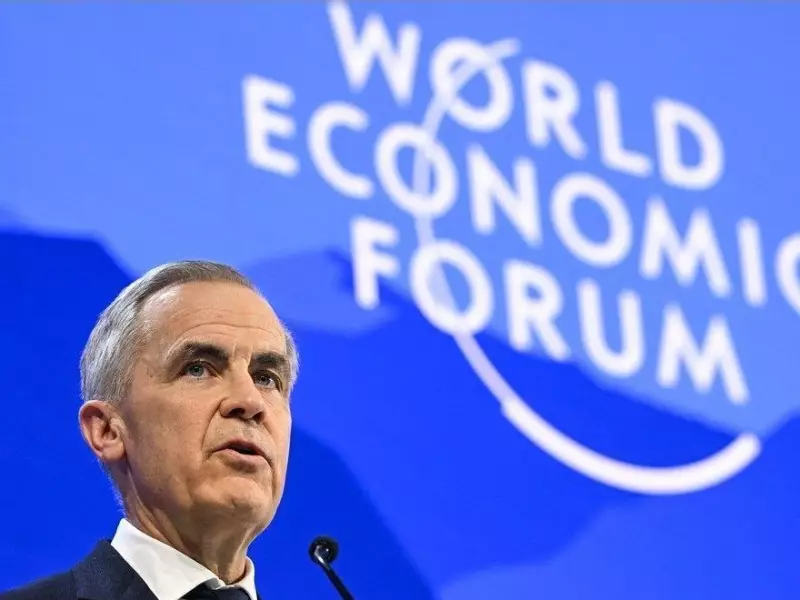
Prime Minister Mark Carney's recent appearance at the World Economic Forum in Davos, Switzerland, has become a focal point for political discourse in Canada. Delivering a speech to global financial and political leaders on January 20, 2026, Carney presented a stark assessment of international realities that has prompted both praise and criticism from domestic observers.
A Call to Face Global Realities
Carney's message was characterized as short, blunt, and strategically significant. He emphasized that the traditional rules-based world order has fundamentally shifted, noting that major powers like China and America have frequently operated outside established norms for decades. The Prime Minister highlighted how these nations are actively expanding their spheres of influence while Russia continues aggressive territorial ambitions.
"It's not your grandfather's rules-based world order," Carney remarked during his address, adding that this framework "never really was" as absolute as many believed. His central thesis called for smaller nations, including Canada, to develop the courage to confront these new geopolitical realities directly.

Conservative Criticism and Subsequent Praise
The initial response from Conservative Leader Pierre Poilievre's office was notably critical, describing Carney's trip as an "unneeded indulgence." This characterization sparked debate about the appropriate tone for political discourse during serious international engagements.
However, in a noteworthy development following the speech, Poilievre himself offered praise for Carney's message and expressed Conservative Party support for initiatives that would make Canada less dependent on larger powers. This represented a significant shift in tone from many of his previous remarks about the government's international approach.
Proposed Strategy for Smaller Nations
Carney outlined a specific path forward for countries like Canada in the current geopolitical landscape. He advocated for smaller nations to:
- Form strengthened trade alliances
- Develop enhanced security arrangements
- Create cultural partnerships designed to counterbalance major power influence
The Prime Minister warned that a "go-it-alone strategy" would likely result in what he termed a "spiral to fake sovereignty," emphasizing the necessity of collaborative approaches among middle powers.
Domestic Policy Parallels
Carney extended his reality-based framework to domestic challenges, arguing that Canada must apply similar courage to internal issues. He specifically mentioned:
- The need for reconciliation efforts with First Nations that acknowledge fiscal and global realities
- Environmental initiatives that produce measurable results without weakening national economic foundations
- Addressing potential abuses in COVID-era aid programs with greater scrutiny than currently applied
The Prime Minister pointed to Minnesota's experience with pandemic aid fraud as a cautionary tale, noting that Canada has been "equally cavalier" in its approach but less diligent in pursuing accountability.
Political Implications and Future Directions
As the Conservative Party prepares to gather in Calgary for its upcoming convention, Carney's speech has become an unexpected reference point for political strategy discussions. Some commentators have suggested that Conservative members should listen to the address directly to better understand the government's international positioning.
The episode highlights ongoing tensions between political messaging and substantive policy discussion, particularly regarding how Canada navigates relationships with traditional allies like the United States while asserting greater independence in trade and security matters.

Carney's ability to command a global audience at Davos has been noted as a significant asset for Canada's international profile, even as domestic political debates continue about the substance and cost of such engagements. The coming weeks will reveal whether this speech marks a turning point in cross-party approaches to foreign policy or remains another point of contention in Canada's political landscape.