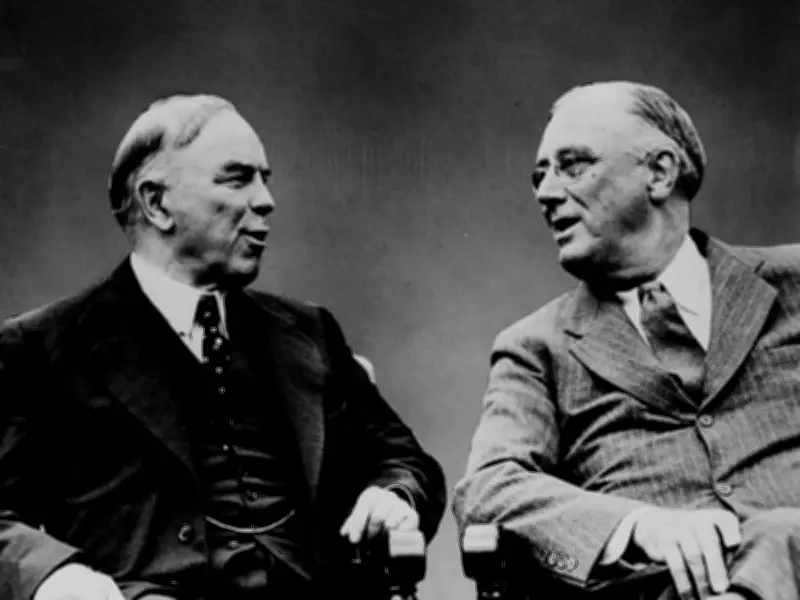
Carney's Ambiguous Stance on Iran War Echoes Mackenzie King's Wartime Leadership
In a recent Oval Office statement, former U.S. President Donald Trump dismissed British Prime Minister Keir Starmer as "no Churchill," criticizing the United Kingdom's initial refusal to allow American use of air bases for strikes against Iran. While Starmer could have retorted that Trump is "no Franklin Roosevelt," the exchange highlights broader questions about leadership during international conflicts, particularly regarding Canada's current position under Prime Minister Mark Carney.
Historical Parallels in Leadership Styles
Franklin D. Roosevelt, unlike Trump, secured substantial popular vote majorities, controlled Congress with significant margins, and implemented his social reforms through legislation rather than executive orders, ensuring their longevity. His famous fireside chats demonstrated an ability to explain complex issues in accessible terms to ordinary Americans. However, both leaders faced considerable opposition to U.S. involvement in foreign wars, with Roosevelt employing strategic ambiguity to support Britain until the Pearl Harbor attack forced clearer action.
The irony in the current situation lies in Starmer's own support for allowing U.S. base usage, which he failed to persuade his national security team to endorse. This failure reflects tactical shortcomings rather than a lack of strategic vision, mirroring the delicate balance leaders must maintain between international alliances and domestic consensus.

Mackenzie King's Legacy of Creative Ambiguity
These comparisons naturally lead to examining whether Prime Minister Mark Carney embodies a modern-day version of William Lyon Mackenzie King—not the eccentric figure who consulted spiritual mediums, but the shrewd politician who navigated Canada through the profound divisions of World War II. King's most famous statement, "Conscription if necessary but not necessarily conscription," exemplifies his deliberate ambiguity, which stood in stark contrast to Churchill's clarity but served a crucial purpose in a fractured nation.
Canada during King's era was deeply divided along ethnic lines. When King George VI and Queen Elizabeth visited Quebec City in 1939, Quebec Premier Maurice Duplessis notably avoided the official lunch, citing personal matters. During parliamentary debates on declaring war, several Quebec Liberals and the leader of what would become the NDP opposed the motion, though no formal vote was recorded. King had previously assured his Cabinet that conscription for foreign service would not be implemented, fearing it could provoke riots similar to those in 1917.
Carney's Approach to Contemporary Conflicts
Prime Minister Carney's ambiguous stance on the legality of the Iran war and Canada's support for it echoes King's strategy of "dodging and weaving" to preserve national unity. In an ethnically and politically diverse country, clear positions on international military actions can exacerbate domestic tensions. Carney's reluctance to take a definitive stand may reflect a calculated effort to avoid alienating any significant segment of the population, much as King did during World War II.
This approach, while potentially frustrating to allies seeking unequivocal support, has historical precedent in successfully maintaining Canada's cohesion during times of global conflict. The question remains whether such ambiguity will prove as effective in the 21st century as it was in the 1940s, given the rapid dissemination of information and heightened public scrutiny.
Conclusion: Leadership in Divided TimesThe parallels between Carney and King underscore the enduring challenges of leading a diverse nation through international crises. While Trump's criticism of Starmer highlights expectations for Churchillian decisiveness, the Canadian context often demands a more nuanced approach. Carney's ambiguous position on the Iran conflict, reminiscent of King's wartime tactics, aims to balance international obligations with domestic harmony, a strategy that historically contributed to keeping Canada united despite profound internal divisions.