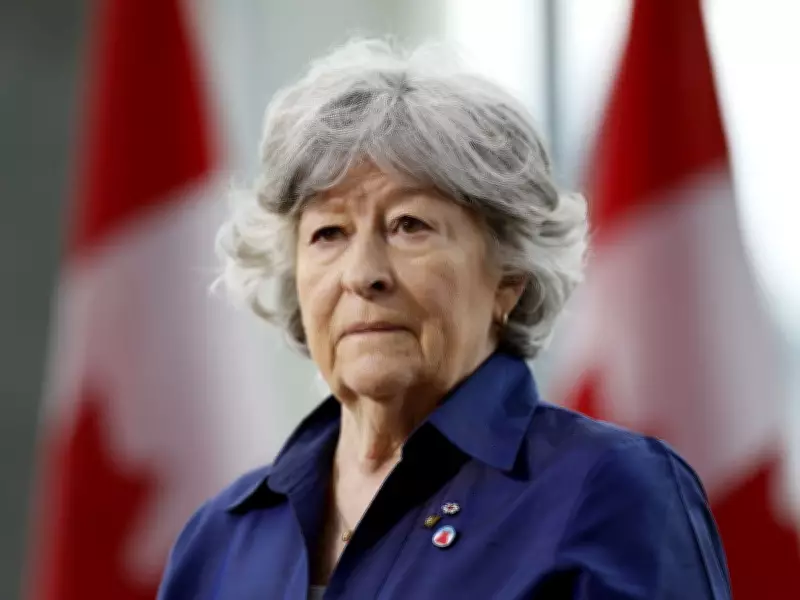
Former Supreme Court of Canada judge Louise Arbour will assume the role of the next governor general as voices of separatism in Canada grow increasingly louder. Arbour brings to her new position a wealth of judicial experience both domestically and internationally, along with an outstanding resume. However, it is not legal matters but the nation's unity that may present her biggest challenge.
A Divisive Appointment?
Arbour and Prime Minister Mark Carney are among that cozy class of citizens known as the Laurentian Elite, who hope to control power and destinies. Separatists are often at the other end of the spectrum, part of a grassroots movement dominated by the common people. Can Arbour bridge the gap? She will certainly have to try, as it is her constitutional duty to maintain the unity of Canada. Part of her role is defined as bringing people together in a spirit of goodwill and common cause, nurturing a sense of shared purpose, identity, compassion, and achievement, as well as promoting respect for the diverse experiences, backgrounds, and perspectives of all Canadians.
Arbour's Evolving Views on Nationalism
Her views on nationalism have changed considerably from her rosy outlook in her early years in Quebec, shaped by sovereigntist singer-songwriter Gilles Vigneault, to her later role in investigating the bloody ethnic and nationalist conflict that tore apart Yugoslavia. Arbour once described growing up in francophone Quebec, being deeply rooted in French literature and not speaking English (she is now bilingual), and then experiencing culture shock when she began working in Ontario.

"The depth of the cultural shock was a big surprise to me. And, at least in those days, my whole vision of nationalism, as for many Québécois of my generation, was a very romantic one," she said in an interview as part of a history project by the Canadian Museum of History. "We experienced a type of nationalism expressed by our poets, artists, songwriters," a nationalism "where my country is open to everyone."
The Impact of Yugoslavia
Her role as United Nations chief prosecutor for the International Criminal Tribunal for the former Yugoslavia would drastically change that outlook. "Then I ended up in Yugoslavia and saw how pathological nationalism can be. This was a revelation to me and a very profound one. In some ways it overturned deeply ingrained concepts that I was sure were right. They were rooted in my upbringing and my personality." She added, "That's why I think I was lucky, because I saw things very differently. I saw worlds that were turned upside down."
Rising Separatism in Alberta
Such a mindset may be invaluable as separatists seek to become a force in Canada. This week, Alberta separatists said they had obtained more than 300,000 signatures on a petition for independence. If those signatures are verified by Elections Alberta, it would be more than required for a referendum. "We are extremely proud of such a successful campaign," Jeffrey Rath, general counsel to the Stay Free Alberta independence petition campaign, told National Post. "Hundreds of thousands of Albertans have expressed a clear desire to vote to become a free and independent country."