Congress Intensifies Scrutiny of Trump's Iran War Amid Rising Costs and Casualties
President Donald Trump initiated military action against Iran without seeking congressional approval, but lawmakers are now raising urgent questions about the conflict's duration, methodology, and financial burden. Three weeks into the engagement, the consequences are becoming starkly evident. At least 13 U.S. military personnel have lost their lives, with over 230 wounded. A pending $200 billion request from the Pentagon for war funds awaits White House action. Meanwhile, allies face attacks, oil prices surge unpredictably, and thousands of U.S. troops deploy to the Middle East with no definitive endgame established.
Strategic Ambiguity Sparks Bipartisan Concern
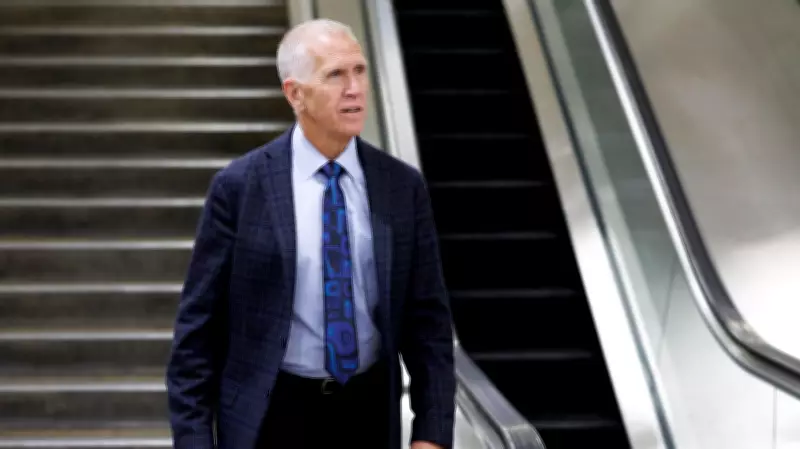
Senator Thom Tillis, a Republican from North Carolina, articulated a growing unease among legislators, emphasizing the need for clarity. "The real question is: What ultimately are we trying to accomplish?" he stated. "I generally support anything that takes out the mullahs, but at the end of the day, there has to be a kind of strategic articulation of the strategy, what our objectives are." Trump hinted at potentially "winding down" operations late Friday, yet simultaneously outlined new goals, adding to the confusion.
Congressional Gridlock Under War Powers Act
The Republican-controlled Congress faces a test of resolve as Trump's decision to launch a U.S.-Israel-led war with Iran unfolds. While Republicans have largely backed the commander in chief, they are poised to confront more significant wartime decisions soon. Under the War Powers Act, the president can conduct military operations for 60 days without congressional approval. Thus far, Republicans have easily defeated several Democratic resolutions aimed at halting the campaign. However, lawmakers warn that the administration must present a more comprehensive strategy or risk backlash, especially as they are asked to approve billions in new spending.

Trump's casual remark that the war will end "when I feel it in my bones" has alarmed officials. Senator Mark Warner, the top Democrat on the Senate Intelligence Committee, expressed disbelief: "When he feels it in his bones? That's crazy."
House Speaker Claims Mission Near Completion
Despite the ongoing conflict, the president's party appears unlikely to directly challenge him. House Speaker Mike Johnson asserted that the military operation is nearing its conclusion. "I do think the original mission is virtually accomplished now," Johnson, a Republican from Louisiana, explained. "We were trying to take out the ballistic missiles, and their means of production, and neuter the navy, and those objectives have been met." He acknowledged that Iran's ability to threaten ships in the Strait of Hormuz is prolonging the situation, particularly as U.S. allies have largely declined to assist.
"As soon as we bring some calm to the situation, I think it's all but done," Johnson added. Yet, the administration's stated goals—such as preventing Iran from obtaining nuclear weapons and degrading its ballistic missile capabilities—have perplexed lawmakers as shifting and elusive. Warner noted, "Regime change? Not likely. Get rid of the enriched uranium? Not without boots on the ground." He advised, "If I'm advising the president, I would have said: Before you take on a war of choice, make the case clear to the American people what our goals are."
Financial Implications and Congressional Oversight
Congress retains the power of the purse, and the Pentagon's request for an additional $200 billion for the war effort is meeting resistance. Senate Democratic leader Chuck Schumer of New York labeled the amount "preposterous." The Defense Department's approved appropriations this year exceed $800 billion, and Trump's tax breaks provided an extra $150 billion over several years for upgrades and projects.

Senator Mazie Hirono, a Democrat from Hawaii, highlighted competing priorities. "How about not taking away funding for Medicaid, which will impact millions of people. How about making sure SNAP is funded," she said, referencing health care and food assistance programs cut in last year's Republican tax reductions. "These are things that we should be doing for the American people."
Many lawmakers recall President George W. Bush's approach after the September 11, 2001, attacks, when he sought congressional authorization for military force in Afghanistan and Iraq. Tillis noted that Trump has latitude under the War Powers Act but emphasized the need for action as the 45-day mark approaches. "When you get into the 45-day mark, you've got to start articulating one of two things—an authorization for the use of military force to sustain it beyond that or a very clear path on exit," he stated. "Those are really the options the administration needs to be thinking about."