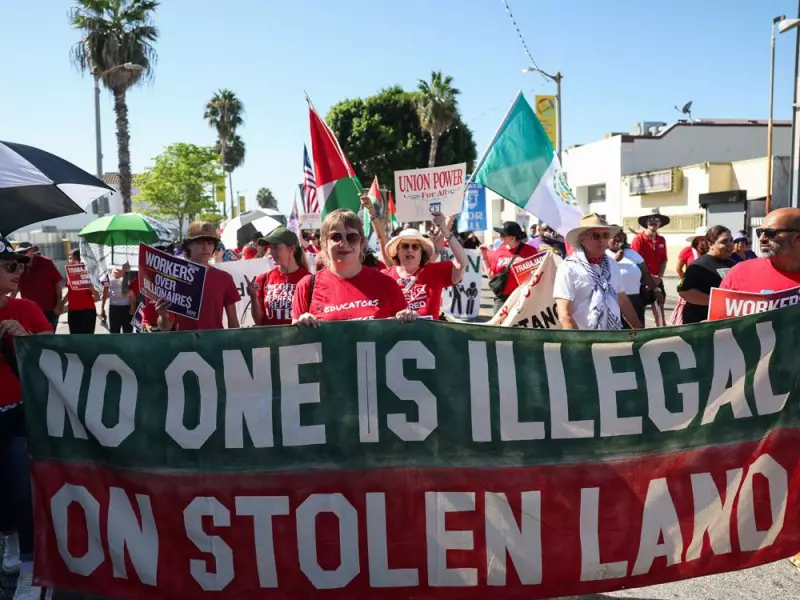
Democrats Position Immigration as Successor to Civil Rights Movement
Political commentator Ben Shapiro has published an analysis examining how the Democratic Party is framing illegal immigration as the new frontline in America's civil rights struggle. In his January 23, 2026 column, Shapiro traces what he describes as the party's ongoing search for a moral cause to replace the historical civil rights movement that once defined its authority.
Historical Context and Shifting Narratives
Shapiro begins by noting that January 19 marked Martin Luther King Jr. Day, honoring the civil rights leader who urged Americans to judge one another by character rather than skin color. He emphasizes that this legacy emerged from a specific historical struggle that culminated in the Civil Rights Act after years of fierce resistance, largely from Southern Democrats, to dismantling Jim Crow segregation laws.
"Since that era ended," Shapiro writes, "the Democratic Party has repeatedly searched for a successor to the civil rights movement that once defined its moral authority." He observes that over decades, various causes have been framed in similar terms, often with what he characterizes as strained comparisons to mid-20th century racial discrimination.

First came movements centered on gender, casting women as victims of a patriarchal system in ways likened to Black Americans' experience under segregation. Later, similar language was applied to issues of sexual orientation and gender identity, with LGBTQ+ advocacy presented as the new frontline of civil rights.
Immigration as the Latest Frontier
According to Shapiro's analysis, Democrats have now settled on illegal immigration as their latest civil rights cause. In this framing, he argues, enforcing immigration law is portrayed not merely as a policy disagreement but as an expression of white supremacy itself. The argument suggests that illegal immigrants must be allowed to remain in the country and that any attempt at enforcement is morally suspect.
"This is a stretch," Shapiro contends, "that suggests demand for examples of systemic American racism has outpaced the available supply."
He points to recent rhetoric from former attorney general Eric Holder, who warned on January 19 that the Voting Rights Act faces an abiding threat, claiming the Trump administration is pursuing "unprecedented mid-decade gerrymandering attempts" and engaging in a "concerted effort to resegregate America."
Rhetoric Versus Reality
Shapiro argues this language dramatically overshoots reality. He maintains there is no serious movement in the United States to reinstate segregated schools, water fountains, restaurants, or public accommodations. No credible constituency, he asserts, is calling for a return to Jim Crow, and no sentient observer believes America is on the verge of enforced racial separation.
In fact, Shapiro presents polling data showing that until around 2013, large majorities of both Black and white Americans believed race relations were getting better and had improved significantly since the 1960s. That perception changed during the later Barack Obama years and the rise of the Black Lives Matter movement, which coincided with a sharp decline in public optimism about race relations.
"But declining optimism is not the same as renewed racial oppression," Shapiro emphasizes, "nor does it suggest that white supremacy now rules the roost."
The Political Imperative Behind the Narrative
Shapiro suggests the search continues because Democrats need a new civil rights struggle to justify claims of moral urgency and political authority. He argues this case has become increasingly difficult to make, with the party now defined for many voters by:
- Abortion on demand
- An inability to articulate basic distinctions about sex and gender
- A posture approaching open borders
So illegal immigration, he concludes, is being folded into the civil rights narrative. Yet Shapiro predicts this framing will ultimately fall short, just as previous attempts have done. His analysis presents a conservative perspective on what he views as the Democratic Party's evolving approach to moral and political positioning in contemporary American politics.