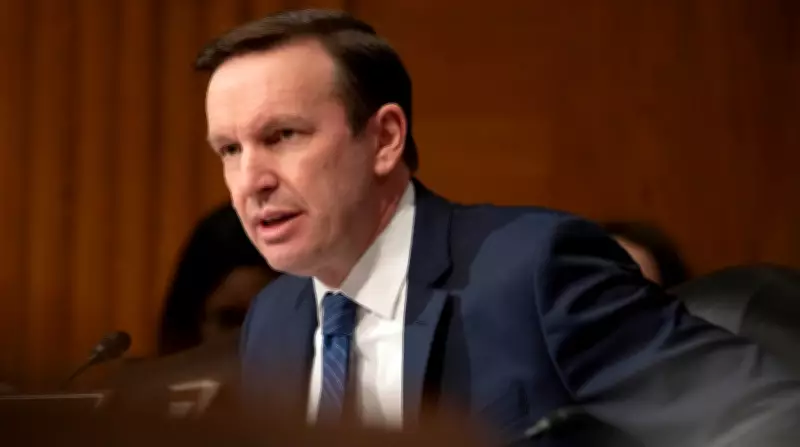
Democratic lawmakers emerged from a classified briefing on the U.S. war in Iran sharply critical of the Trump administration's strategy and rationale for launching the nation into another Middle Eastern conflict. Senator Chris Murphy, a Democrat from Connecticut, expressed deep concerns about the open-ended nature of the engagement.
Lawmakers Voice Skepticism Over War Goals
Senator Murphy told reporters on Tuesday that he is more convinced than ever that this conflict will be prolonged and indefinite. He described it as a multi-trillion-dollar open-ended engagement with a confusing and constantly shifting set of objectives. Murphy highlighted that the administration appears comfortable with hard-line elements controlling Iran, as they plan to permanently conduct air operations to target Iran's missile-making, drone-making, and nuclear capabilities.
Senator Martin Heinrich, a Democrat from New Mexico, echoed these sentiments, stating that he has no more confidence in the administration's strategy now than before the briefing. The closed-door session for all U.S. Senate members featured top Trump administration officials, including Secretary of State Marco Rubio, Defense Secretary Pete Hegseth, CIA Director John Ratcliffe, and Chairman of the Joint Chiefs of Staff Dan Caine.

Rubio Defends Military Strikes
Secretary Rubio defended President Donald Trump's decision to launch massive missile strikes against Iran over the weekend without prior authorization from Congress. Rubio argued that Iran is run by lunatics and religious fanatics with ambitions to develop nuclear weapons, using missiles, drones, and terrorism as shields. He claimed that now is the time to act, as Iran is at its weakest point.
However, senators from both parties reported that no timetable for the conflict was provided, and the administration did not rule out committing U.S. troops on the ground in Iran. Senator Josh Hawley, a Republican from Missouri and a populist critic of foreign interventions, described the situation as very open-ended with ambitious aims that are rapidly evolving.
Legal and Strategic Concerns Raised
Senator Tim Kaine, a Democrat from Virginia, rejected Rubio's rationale for launching military strikes without congressional authorization. Kaine argued that the threat was not imminent, a traditional legal standard for such actions. He criticized the suggestion that the U.S. had to act because Israel might have launched strikes alone, calling it outsourcing the start of a U.S. war to another nation.
When asked if Israel forced his hand, President Trump suggested the opposite might be true, stating that Iran was likely to attack first based on negotiations, and he might have forced Israel's hand instead. Meanwhile, other Democrats focused on criticizing the administration for prioritizing foreign conflicts over domestic issues, aligning with Trump's America First agenda.
Domestic Priorities Questioned
Senator Cory Booker, a Democrat from New Jersey, expressed astonishment at the lack of information justifying the costs in dollars and American lives, especially while the president cuts healthcare and programs for veterans and children. In contrast, Senator John Fetterman of Pennsylvania was the only Senate Democrat to defend the administration's strategy, urging his colleagues to support blocking Iran from acquiring nuclear weapons.
Fetterman clarified that he would not support a bipartisan effort to end hostilities without explicit congressional authorization, as he found no shocking new information in the briefing. The debate highlights deep divisions over the U.S. approach to Iran, with Democrats largely opposing what they see as an unauthorized and open-ended military engagement.