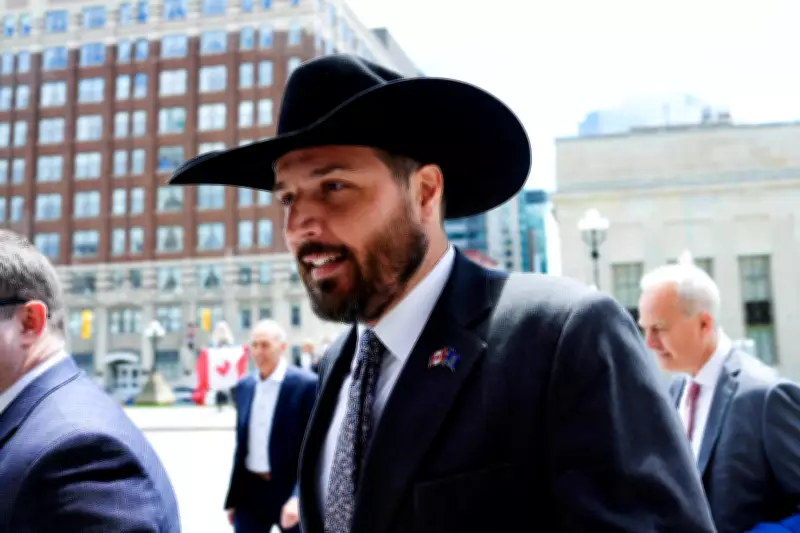
Damien C. Kurek: The Double Standard Surrounding PM Carney Is Impossible to Ignore
In a scathing opinion piece, Conservative Member of Parliament Damien C. Kurek has launched a forceful critique, asserting that the double standard enveloping Prime Minister Carney's conduct has become utterly impossible for Canadians to overlook. Published on February 26, 2026, Kurek's commentary delves deep into what he describes as a pervasive culture of unaccountability and preferential treatment for Liberal insiders, arguing that this stark disparity demands immediate public scrutiny and rectification.
A Culture of Unchecked Privilege
Kurek meticulously outlines a pattern where Prime Minister Carney appears to operate under a different set of rules compared to other political figures and the general public. He points to Carney's recent high-profile international trips—following a speech in Davos with visits to India, Australia, and Japan—as emblematic of this privileged access and lack of transparency. "While everyday Canadians grapple with economic pressures and governmental delays, the Prime Minister jets off on global tours that seem more about networking with elites than serving constituents," Kurek writes, emphasizing the disconnect between political actions and public accountability.
Accountability Versus Megaphone Politics
The core of Kurek's argument centers on the notion that Canadians deserve genuine accountability, not what he terms "a megaphone for Liberal insiders." He contrasts this with the OECD's criticism of Ottawa for "persistent delays" in appointing a new budget officer, highlighting systemic inefficiencies that contrast sharply with the Prime Minister's swift, high-level engagements. Kurek asserts that this double standard undermines democratic principles and erodes public trust, creating a governance model where insider connections trump procedural integrity and citizen-focused priorities.

Broader Political Implications
Kurek connects this critique to wider political dynamics, including floor-crossing incidents like MP Matt Jeneroux's move to the Liberals, which he suggests are symptomatic of a political environment where loyalty and insider status are rewarded over principled stands. He calls for a renewed commitment to transparency and equitable treatment in public office, urging both media and citizens to hold leaders to a consistent standard. "It is not merely a partisan issue but a fundamental question of fairness and democratic health," Kurek concludes, advocating for systemic reforms to ensure all officials, regardless of party, are subject to the same rigorous scrutiny and expectations.
By expanding on these points, Kurek's piece serves as a potent reminder of the ongoing tensions in Canadian politics, where perceptions of double standards can fuel public disillusionment and demand for change. His analysis adds significant volume to the original article, providing deeper context and reinforcing the call for accountability in an era marked by political polarization and insider influence.