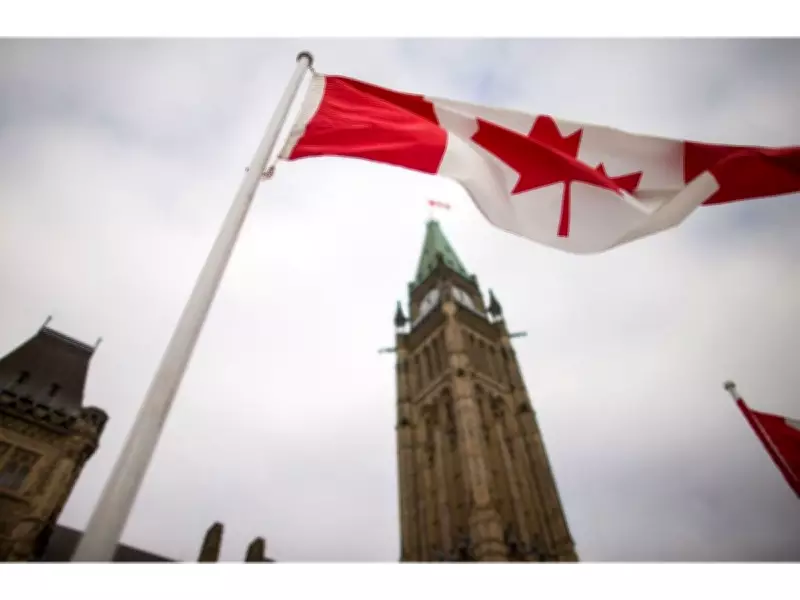
The political landscape in Canada is witnessing renewed scrutiny over the practice of floor crossings, where elected officials switch party allegiance, as recent moves spark debate about parliamentary ethics and strategic positioning.
Historical Precedents and Contemporary Reactions
In 2006, former Vancouver MP David Emerson made headlines by crossing the floor to join the Conservative Party shortly after winning a federal seat as a Liberal. Emerson subsequently became a minister in Prime Minister Stephen Harper's first cabinet. An inquiry by the Office of the Ethics Commissioner followed, concluding that no rules were broken. Similarly, in 2018, Leona Alleslev crossed from the Liberals to the Conservatives, an action that drew little complaint from current Conservative leader Pierre Poilievre about so-called "dirty tricks."
These historical examples provide context for current discussions, as recent floor crossings to the Liberals have intensified political commentary. Following a federal election loss to Mark Carney's Liberals, Poilievre finds himself in a complex position. The departure of "true blue conservative" MP Marilyn Gladu to the Liberals, coupled with poor byelection results, has led some analysts to suggest that Poilievre's leadership appeal is weakening. Critics argue that his combative style may be a liability, failing to offer Canadians substantive policies to vote for.

The Centrist Majority in Canadian Politics
Amid these political maneuvers, a significant portion of Canadians identify with centrist views. According to a 2024 poll, approximately 33 to 39 percent of Canadians—the "middle" majority—place themselves in the centre of the political spectrum. An additional 14 to 15 percent identify as centre-right, and 15 percent as centre-left. Fewer than one in ten Canadians identify strictly as "left" or "right," with even fewer—under five percent—aligning with the extreme ends of the spectrum.
This data indicates that while polarization has increased in many Western democracies, Canadians remain more likely than Americans to hold centrist views and less likely to harbor extreme animosity toward opposing political sides. This centrist tendency shapes the political environment, influencing how leaders craft their messages and policies.
Carney's Economic Strategy and Investment Initiatives
In contrast to Poilievre's challenges, Prime Minister Mark Carney is pursuing an economic strategy designed to appeal to centralists. Carney's approach blends state-led industrial policy with targeted tax incentives and a focus on "central" economic planning, aimed at restructuring Canada's economy. This has been described as a return to "centre" or "brokerage" politics, emphasizing stability and practical solutions over ideology.
As part of this strategy, Carney has announced the first-ever Canada Investment Summit, scheduled for September 14 and 15 in Toronto. This summit is a key component of an ambitious federal plan to unleash $1 trillion in total investment over the next five years. The goal is to fuel nation-building projects and job creation by leveraging Canada's strengths in energy, technology, and critical minerals. These initiatives are tailored to build a stronger, more independent economy in a shifting global order, resonating with those seeking economic growth and pragmatic governance.
Public Sentiment and Additional Perspectives
Beyond federal politics, public letters to editors reflect broader concerns. For instance, a letter from Dale Laird in Vancouver highlights safety issues on the Sea to Sky Highway, specifically a dangerous curve north of Tunnel Point. Laird advocates for eliminating the hazard by installing a cantilevered bridge to straighten the road, demonstrating how local infrastructure debates intersect with national policy discussions.
Another letter from William Perry in Victoria underscores the desire among Canada's "middle" majority for practical solutions. Perry notes that this plurality seeks stability and economic growth, often prioritizing these over rigid political ideologies. This sentiment aligns with Carney's centrist economic initiatives, suggesting a potential alignment between public preferences and governmental actions.

Overall, the interplay between historical floor crossings, current political dynamics, and the centrist leanings of Canadians creates a nuanced narrative. As leaders like Poilievre navigate internal party challenges and Carney advances his investment-focused agenda, the political discourse continues to evolve, shaped by both ethical considerations and the pragmatic demands of the electorate.