Elections Canada Finds Freeland in Violation of Election Law Over Byelection Comments
In a significant ruling, Elections Canada has declared that Deputy Prime Minister Chrystia Freeland violated federal election laws by responding to inquiries about a recent byelection. The decision underscores the strict regulations governing political communications during electoral periods and raises questions about adherence to legal standards by high-ranking officials.
Details of the Violation and Its Implications
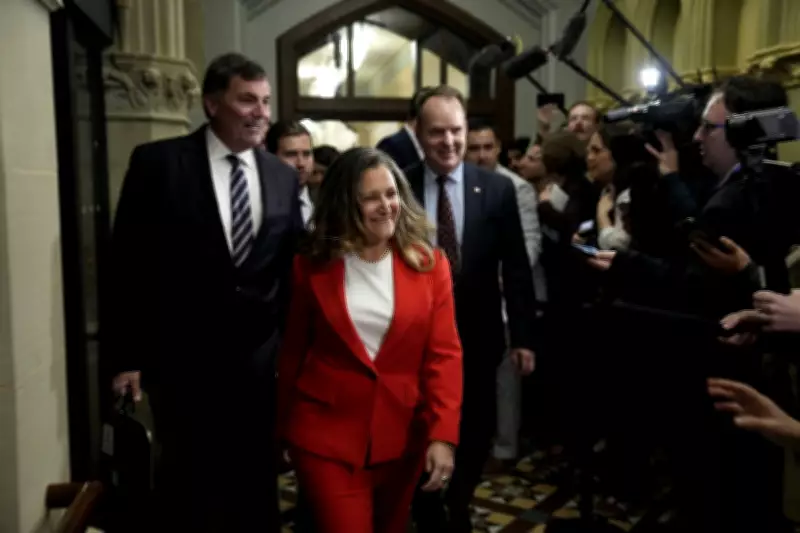
The incident occurred when Freeland, who serves as King’s Privy Council President, engaged with journalists on Parliament Hill in Ottawa, addressing topics related to the byelection. According to Elections Canada, such actions contravene provisions designed to prevent undue influence or premature disclosures that could affect electoral fairness. This ruling comes amid a backdrop of heightened political activity, including other notable events such as Prime Minister Carney’s attendance at a vigil in Tumbler Ridge and ongoing debates over federal policies.
The legal breach is part of a broader pattern of scrutiny facing government officials, with recent reports highlighting misconduct cases among federal employees and legislative fast-tracking of budget bills. Freeland’s violation adds to concerns about transparency and accountability within the political sphere, potentially impacting public trust.

Context and Broader Political Landscape
This development aligns with ongoing discussions on electoral integrity and government conduct. For instance, the Information Commissioner has advocated for extending access laws to cover the Prime Minister’s Office, while unions have resisted new office mandates, citing bad faith. In parallel, provincial leaders like Alberta Premier Danielle Smith have addressed separatist petitions, and municipalities are calling for urgent immigration measures, reflecting a complex national dialogue.
The ruling by Elections Canada may prompt further investigations or reforms to ensure compliance with election laws. It also intersects with environmental and health issues, such as Canada’s failure to meet climate targets and challenges in healthcare, illustrating the multifaceted nature of current political and social challenges.

- Freeland’s comments were deemed illegal under election statutes.
- The violation highlights the need for stricter adherence to electoral guidelines.
- This case could influence future political communications and legal frameworks.