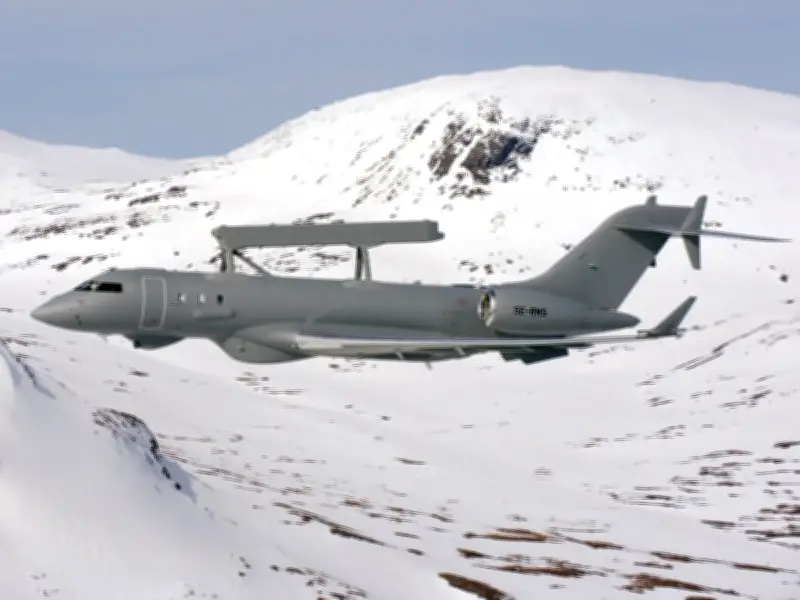
Canada's purchase of the GlobalEye early warning and surveillance aircraft will allow the military to significantly cut down the time needed to acquire the new fleet of planes. The Royal Canadian Air Force had originally set aside five years to analyze and define various options for the project worth more than $5 billion, according to 2026 military planning documents obtained by the Ottawa Citizen.
Preferred Supplier Approach Accelerates Process
But the Liberal government bypassed much of that period with its announcement that Canada would enter into direct negotiations with Saab for the GlobalEye aircraft. Prime Minister Mark Carney announced the deal on May 27 at the CANSEC defence trade show in Ottawa, pointing out the initiative would not only boost military capabilities but also create Canadian jobs.
Lindsey Ehman, spokesperson for the Defence Investment Agency, acknowledged the fast-tracked process. “While the DIA cannot comment on ongoing procurement processes, the use of a preferred supplier approach is expected to significantly accelerate the progression of the project,” she said in an email. Ehman pointed out that Canada still had to further assess its requirements and industrial benefits before determining the next steps.

Industrial Benefits and Canadian Jobs
GlobalEye is based on a Bombardier executive jet built in Toronto, and Saab, of Sweden, is expected to cut a deal in which a certain number of the aircraft orders for allied nations would be built in Canada. The Liberal government expects that around 40 GlobalEye aircraft will be built in Canada.
Carney’s speech seemed to confirm that, despite ongoing talks on the project, GlobalEye was already a done deal. “With a suite of advanced sensors and mission systems, Saab’s GlobalEye will be a key resource for the Canadian Armed Forces to detect and deter threats across the Arctic,” Carney said in his speech at CANSEC.
International Orders and NATO Interest
The United Arab Emirates is currently flying the aircraft. Sweden and France have also placed orders. In April, the French defence publication La Lettre and the German press agency DPA reported that NATO’s Support and Procurement Agency had selected Sweden’s Saab and Canada’s Bombardier to replace the alliance’s current fleet of U.S.-built airborne warning and control aircraft. An official announcement on a NATO purchase has yet to be made.
“By signaling the selection of SAAB as a preferred supplier, Canada is indicating our intention to work with a trusted ally and secure the best contract for the country through highly skilled Canadian jobs, strong domestic aerospace and defence capabilities, technology transfer and industrial partnerships,” Ehman said.