Maryland Governor Condemns Trump's Black History Month Remarks as Self-Congratulatory
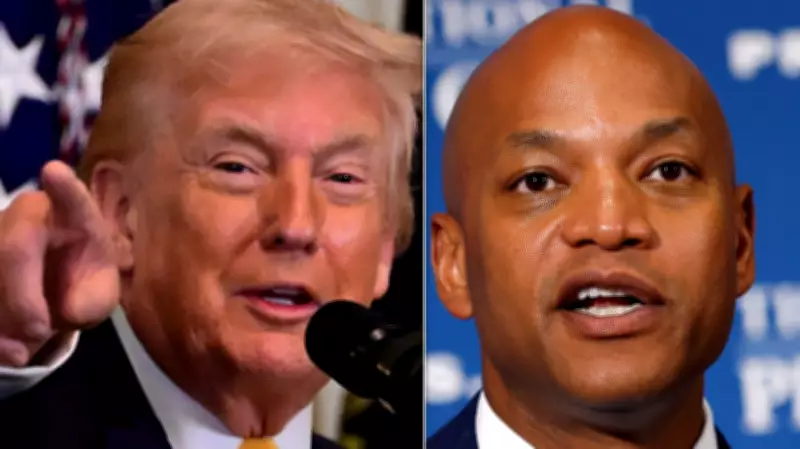
Maryland Governor Wes Moore, a Democrat, has strongly criticized President Donald Trump for what he described as self-congratulatory remarks made during a Black History Month reception at the White House. The governor appeared on The Briefing with Jen Psaki where he expressed his disappointment with the president's approach to commemorating this important month.
Trump's Focus on Personal Loyalty Draws Criticism
During the White House event, President Trump emphasized the personal loyalty of Black sports figures and celebrities who support him, including Mike Tyson and Herschel Walker. "Mike Tyson, boy, I tell you, Mike has been loyal to me," Trump said in remarks that have since drawn widespread criticism. He also mentioned boxing icon Muhammad Ali and rapper Nicki Minaj, commenting on her appearance.
Governor Moore responded that he was "hardly ever speechless" but found Trump's approach difficult to address. "This is a time where it's difficult to have a response to that, when the way you're addressing Black History Month is just talking about the individual Black friends that you have," Moore told Psaki.

Historical Significance Versus Personal Relationships
The governor emphasized that Black History Month represents something far more significant than personal relationships. "Black History Month is not about an individual sports hero. Black history is about the foundation of America," Moore stated. "It's about the fact that this country's history would be incomplete if we don't fully embrace the contributions that Black Americans have made — oftentimes to a country that never showed them the same respect back."
Moore further explained that the month should focus on understanding America's "deeply uneven" history and addressing contemporary issues like book bans and historical censorship.
Expert Analysis: A Politically Motivated Event
LaGarrett King, professor of social studies education and director of the Center for K-12 Black History and Racial Literacy Education at the University at Buffalo, agreed that Trump's event "missed the mark." King told media outlets that the reception appeared "disingenuous" and seemed like a "check mark to continue the discourse that 'he is not racist.'"
"If you are not racist, you should not have to continue to push the narrative that you are not," King argued. "Your actions will show that."
The professor noted that while Trump did reference some historical contributions of Black Americans, including the Buffalo Soldiers, the overall focus on celebrities who support him felt like "propaganda" that undermined the real purpose of Black History Month.
Broader Context of Trump's Policies
The criticism comes amid broader concerns about the Trump administration's approach to diversity and historical education:
- On the first day of his second term, Trump signed an executive order dismantling federal diversity, equity and inclusion programs
- Federal agencies have subsequently halted Black History Month celebrations
- Companies have changed their diversity practices following the administration's crackdown
- Trump has ordered the removal of what he calls "divisive ideology" from national parks and schools
King emphasized that Black History Month should not be about highlighting friends but about "bringing in new narratives, new ideas, and new perspectives that help us become better." He acknowledged that while many Black History Month events do celebrate celebrities, the White House event appeared particularly politically motivated.
Recent Controversies Compound Concerns
The criticism of Trump's Black History Month remarks follows recent controversy surrounding a racist video shared on his Truth Social platform that depicted former President Barack Obama and former First Lady Michelle Obama as apes. Trump blamed a staffer for posting the video but refused to apologize.

King called this lack of apology "inexcusable," noting that "the image came from his account, and there needed to be some accountability for that action."
Both Governor Moore and Professor King emphasized that Black History Month represents an opportunity to address America's complex racial history and celebrate the unique contributions of Black Americans, rather than serving as a platform for political messaging or personal validation.