Federal Firearms Compensation Program Faces Staggering Cost Overruns
The Liberal government's initiative to "buy back" thousands of previously legal firearms has encountered significant financial challenges, with costs soaring to more than $24,000 for each weapon collected under the program. According to recent analysis, this expenditure translates to a scenario where for every three firearms surrendered, the federal government could have alternatively funded the starting salary of a full-time RCMP officer, which stands at $71,191.
Program Details and Historical Context
Nearly six years ago, under then Prime Minister Justin Trudeau, the government issued a surprise order-in-council that reclassified over 1,500 models of firearms as "prohibited." This decision instantly affected tens of thousands of guns that had been legally owned for purposes such as hunting and sports shooting. Overnight, these firearms became subject to Canada's strictest regulations, prohibiting their sale, transfer, or removal from storage, with violations carrying severe penalties including jail time and confiscation.
The criteria for prohibition were somewhat arbitrary, targeting firearms that resembled assault rifles in appearance, even if they shared identical calibre, capacity, and rate of fire with weapons that remained non-restricted. In response, the Assault-Style Firearms Compensation Program (ASFCP) was established to collect these prohibited arms in exchange for financial compensation, officially launching on January 19.

Financial Breakdown and Comparisons
As of the latest data from Public Safety Canada, more than 32,000 firearms have been collected in the first six weeks of the program. However, this achievement comes at a staggering cost of $779.8 million incurred to date. This figure averages out to approximately $24,370 per firearm, with the majority of expenses attributed to administrative overhead that original owners will never receive.
To put this into perspective:
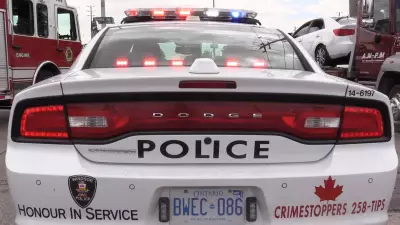
- For every two guns collected, the government could have purchased a new, fully-equipped patrol car.
- The maximum compensation listed for a rare precision rifle is $9,945, with most payouts ranging between $500 and $3,500, highlighting the disparity between compensation and actual costs.
Budgetary Concerns and Oversight
The $779.8 million total was uncovered by Daniel Fritter, a writer for Calibre Magazine, who meticulously tracked multiple instances where the program received additional government funding, pushing it well beyond its original budget. Initially, official declarations capped the program cost at $742 million, with $250 million allocated for compensation to cover up to 136,000 firearms.
Long before any firearms were collected, the ASFCP had already accumulated $51.6 million in staffing and clerical costs between 2021 and 2023, as revealed through an Order Paper request filed in 2024 by Conservative MP Larry Brock. This early expenditure underscores the program's administrative burden and raises questions about its overall efficiency and fiscal management.
The government has not disclosed specific details about the types of firearms collected thus far, leaving some uncertainty about the distribution of compensation versus costs. As the program continues, these financial revelations are likely to fuel ongoing debates about public safety priorities and government spending in Canada.