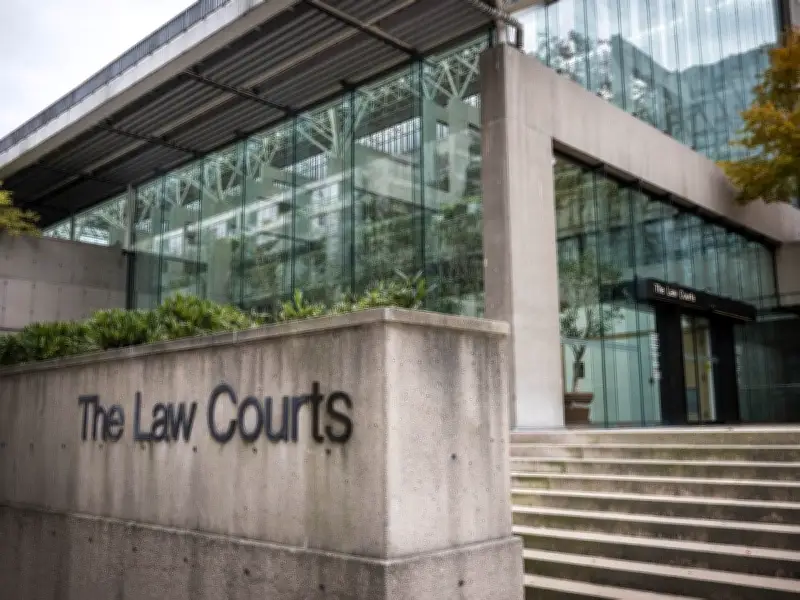
Lawyers representing ICBC in a personal injury lawsuit have been denied a request to adjourn a trial scheduled for late June, which they sought due to court restrictions caused by the FIFA World Cup. The trial date falls within the tournament period, but the judge ruled that postponing the case to accommodate a jury would likely result in a delay of more than a year.
Background of the Case
The case involves a personal injury claim by Sukhwinder Kour related to two motor vehicle accidents that occurred in March and May 2018. In February 2025, a trial date was set for June 29, 2026, and ICBC lawyers filed a letter electing a jury trial. However, in July 2025, the B.C. Supreme Court announced that no criminal trials and no civil jury trials would be held during the FIFA period from June 12 to July 8, 2026.
Court's Reasoning for the Ban
The court notice explained that public safety and traffic management during the World Cup would heavily strain police resources in the Lower Mainland. Additionally, sheriff deployment for tournament security could lead to insufficient personnel for court operations, including transporting accused persons and managing juries. Heavy traffic and a shortage of hotel rooms for deliberating juries or out-of-town witnesses were also cited.

ICBC's Request and Judge's Decision
ICBC sought the adjournment on April 1, 2026, despite having known about the jury ban since July 2025. Pre-trial proceedings had already begun, including a medical examination of Kour by an ICBC-appointed doctor in March. The judge, Associate Judge Scott Nielsen, denied the request, noting that ICBC lawyers had not provided reasons why a jury trial was preferred over a trial by judge alone.
“I assume there is a perceived tactical advantage to a jury trial in the circumstances,” Nielsen wrote. However, this “does not provide a rationale that transcends a mere preference for a jury trial. Rather, it is a strategic choice.”
Impact on the Plaintiff
Kour’s lawyers opposed the adjournment, highlighting that eight years had passed since the accidents, the trial had already been adjourned once, and further delay would cause stress and additional costs. The judge agreed, stating, “For the plaintiff, the trial will likely be delayed by a year. Based on her evidence, it will cause financial hardship and potentially put her and her husband’s retirement plans at risk.”
“There is a point where justice delayed is justice denied,” Nielsen added.
Conclusion
The judge emphasized that the request came nine months after notification of the World Cup’s impact and just three months before trial. The trial will proceed as scheduled on June 29, 2026, without a jury.