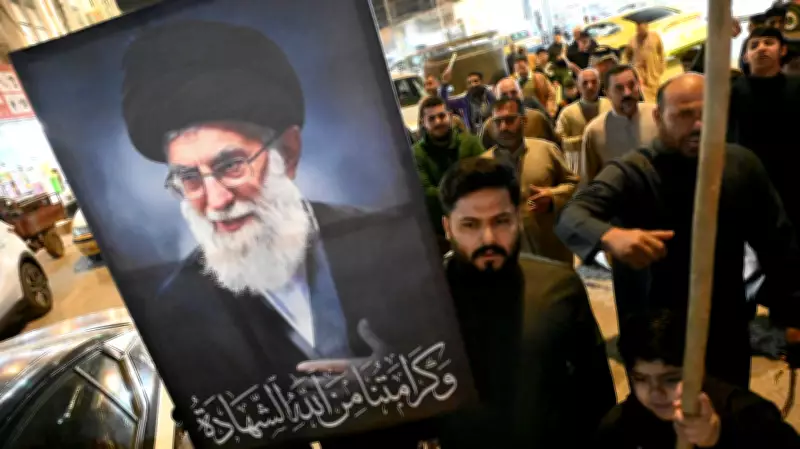
In a significant development, Iran's Assembly of Experts has officially named Mojtaba Khamenei as the country's new supreme leader, succeeding his father, Ayatollah Ali Khamenei, who was killed in recent airstrikes carried out by the United States and Israel. This announcement, reported by state media on Sunday, marks a pivotal moment in Iran's political and religious landscape, as Mojtaba, a mid-ranking cleric with strong connections to the powerful Revolutionary Guards, steps into a role of immense authority.
Succession Amidst Regional Tensions
The appointment comes in the wake of heightened tensions following the death of Ayatollah Ali Khamenei, which has sparked widespread reactions both domestically and internationally. In Basra, a port city in southern Iraq, protests erupted on March 05, 2026, with demonstrators gathering to condemn the airstrikes that led to the leader's demise. During these gatherings, chants in support of Mojtaba Khamenei echoed through the streets, highlighting his emerging influence and the public's anticipation of his ascension.
Internal Dynamics and Hereditary Concerns
Despite Iran's ruling ideology traditionally opposing hereditary succession, Mojtaba Khamenei's rise to power is bolstered by his deep ties within the Revolutionary Guards and the enduring influence of his father's office. He has long been viewed by key elements of Iran's ruling establishment as a potential successor, leveraging his connections to navigate the complex political terrain. This move underscores the delicate balance between ideological principles and practical power structures within the nation.

The transition is expected to shape Iran's future policies and its stance on global affairs, particularly in relation to the United States and Israel. As Mojtaba assumes leadership, analysts are closely monitoring how his background and alliances will influence governance and regional stability. The protests in Basra serve as a reminder of the volatile context surrounding this leadership change, with emotions running high among supporters and critics alike.