Iran's Covert Campaign to Influence Western Politics Through Protest Manipulation
For multiple decades, the Iranian regime has actively pursued strategies to influence and destabilize political landscapes within Western democracies. While this broad objective has been acknowledged in intelligence circles, the extent and sophistication of Iran's successes have often remained obscured from public view. According to detailed intelligence agency assessments, Iran has allocated substantial resources to meticulously stage-manage protests in democratic nations, with these investments yielding significant returns in shaping public discourse and policy.
Post-October 7 Escalation in Campus Activism
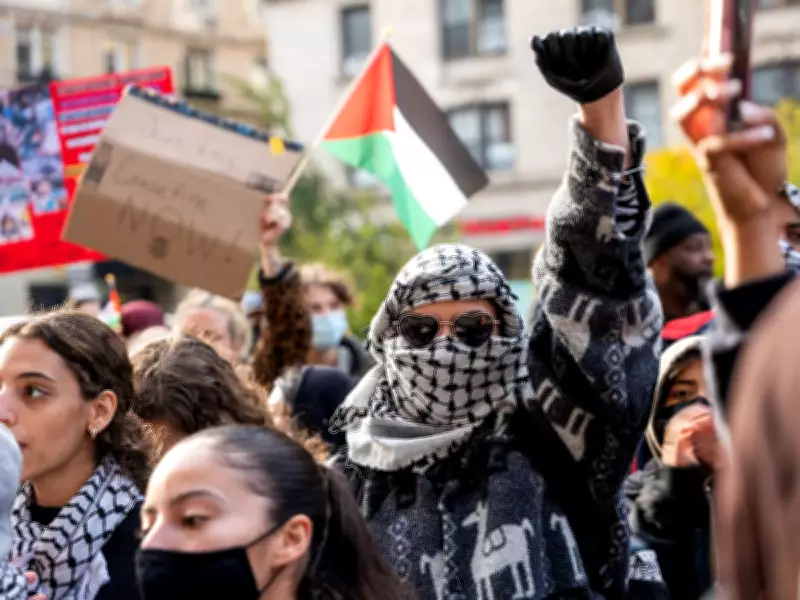
Following the October 7 attacks on Israel, increased media scrutiny began to uncover the depth of Iranian involvement in anti-Israel demonstrations. In August 2024, investigative reporting highlighted that the Iranian regime was channeling funds and exerting influence over college campus protests across the United States, frequently operating through deceptively named organizations. Many participants in these protests remained unaware of the true orchestrators behind the scenes.
Experts from organizations like the Middle East Forum's Islamist Watch project have documented that for years, Iran has collaborated with a diverse array of groups across Europe and North America, including far-left, far-right, and Islamist factions. After October 7, Tehran significantly amplified its financial and logistical support for anti-Israel rallies, encampments, and acts of civil disorder. Evidence has emerged linking the regime to mosques, activist networks, and student groups deeply engaged in pro-terror demonstrations alongside Hamas-aligned entities.

Historical Context and Intelligence Assessments
Iran's role in promoting extremism and terrorism in Western nations, or simply fomenting discord, is not a recent development. A partially declassified CIA analysis from 2018 examined radical cooperation between Iran, Libya, and Syria, noting these states' hostility toward Israel's existence and their efforts to foster revolutionary, anti-Western movements globally. Among them, CIA analysts identified Iran as the most implacable adversary, predicting it would remain the most effective and dangerous state sponsor of terrorism in subsequent years. Iranian activities have spanned from small-scale operations to initiatives with global reach.
Case Studies of Iranian Influence Operations
One notable example involves the fringe orthodox Jewish sect Neturei Karta, which opposes the State of Israel and has members numbering in the low thousands. In the years preceding the October 7 massacre, members of this sect, recognizable by their distinctive religious attire, frequently appeared at protests across North America and Europe, often gaining television coverage. Iran has a long-documented history of supporting this group, with Neturei Karta members recently serving as spokespersons on Iranian state television during the 2024 university encampments.
In 2024, Canadian investigative journalist Nagar Mojahedi, who has faced threats from the Iranian regime, exposed Iranian funding of protests at McGill University. Her reporting uncovered scores of fake online accounts originating from individuals within Iran linked to the regime and the Islamic Revolutionary Guard Corps, which fueled campus protests. Mojahedi described this as a massive, funded, coordinated, and organized effort by Iran aimed at influencing public opinion and government policy, with over 500,000 posts traced back to Iran designed to incite unrest at the prestigious Canadian institution.
Cyber Warfare and Larger-Scale Agitation
Beyond campus activism, Iran engages in larger-scale agitation through cyber operations. Cotton Sandstorm, an infamous Iranian Revolutionary Guard cyberwarfare group, employs fake online accounts, such as one named Jewish Peace Advocate, to disseminate anti-West and anti-Israel propaganda. Microsoft's Threat Intelligence team uncovered these deceptive accounts in early 2024, highlighting the regime's use of digital tools to amplify its influence campaigns and manipulate public sentiment across Western democracies.