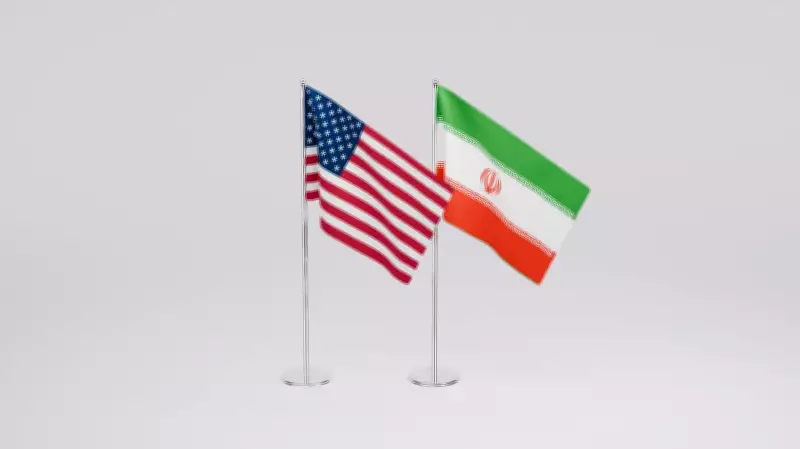
Iranian Americans Confront Emotional Toll of Trump's Rhetoric and War
Every expletive-laden and hyperbolic social media post from President Donald Trump regarding Iran presents a staggering read, particularly those where he threatens to obliterate the country's entire civilization. For Iranian Americans who are closely monitoring a conflict that has already claimed over 2,000 Iranian lives, scrolling through his Truth Social updates makes it challenging to navigate daily life.
Personal Anguish Amidst Global Tensions
Tara Grammy, an Iranian American residing in Los Angeles, expressed her distress, stating, "Every tweet from Trump has felt like a new kind of fresh hell." When Trump warned of taking out Iran "in one night" if the Strait of Hormuz—a vital global supply route—was not reopened, Grammy was petrified. Such actions would constitute war crimes under international law.
Grammy, who left Iran at age six, shared, "My close family are all there except my mom, so all I can think about is the worst-case scenario. Reading the news and his tweets makes my whole world slow down. This is honestly the most challenging time of my life."

Recently, the United States and Israel agreed to a two-week ceasefire, an eleventh-hour deal that seemed to avert Trump's threatened bombing campaign capable of devastating Iran's civilization. However, mere hours after the announcement, Iran and Lebanon reported fresh attacks on Wednesday, raising immediate concerns about the fragility of this agreement.
The Emotional Seesaw of Distance and Indifference
For Grammy, following the news from the safety of her Los Angeles home has been an emotional rollercoaster, especially as many other Americans appear disengaged from the developments—at least until Trump's recent threats gained attention. She emphasized a common sentiment among Iranian Americans: a desire for friends to reach out and check on their well-being.
"I don't expect non-Iranians to understand it fully, but I do expect people to ask questions, to show solidarity," Grammy said. "If you have Iranian friends, ask them questions, tell them you care, tell them you don't know what to say but you love them, right?"
Grammy noted that while she and her Iranian friends share similar concerns, she has even lost some friendships this year due to indifference toward events in Iran, which began with mass killings by Iran's security forces during nationwide protests in January.
"Now with the war, I wish people would post about what's happening," she urged. "Post your outrage, post not just about the war, but also about the murderous regime that has terrorized the people for over 47 years."
Poll Reveals Divergent Perspectives on the Conflict
A recent Reuters/Ipsos poll indicates that many Americans view the war primarily through its domestic impacts, such as risks to U.S. service members and rising energy prices. While concerns about Middle East stability and quality of life in Iran exist, they often feel more abstract and distant to non-Iranians.
Maia Moham, an Iranian American singer based in Southern California, explained, "I do think many Americans are tuned out, not out of indifference, but because it feels far away or complicated. But for Iranian Americans, it doesn't feel abstract—it feels personal, cultural, and emotional."
Moham, whose parents immigrated to the U.S. in the 1970s and 1980s, has family in Tehran, including aunts, uncles, and cousins. She expressed particular worry about a diabetic cousin, as sending medication has become unreliable due to the war's escalation.
Dehumanizing Rhetoric and Cultural Erasure
Meanwhile, U.S. headlines often focus on how gas price spikes and oil shipment disruptions might affect the 2026 midterm elections, overshadowing personal stories. Moham finds it strange to watch discussions about her identity and family history framed in abstract or extreme terms, such as Trump's tweets.
Trump has repeatedly threatened to bomb Iran "back to the Stone Ages where they belong," including in a profanity-laced Easter Sunday post on Truth Social demanding the Strait of Hormuz be opened by Tuesday or face consequences.

"When rhetoric becomes that dehumanizing, it's especially jarring," Moham said. "It's like he's reducing an entire civilization and its people to a political talking point." Beyond the threat of infrastructure destruction, many Iranian Americans are upset by Trump's implication that Iran is inherently uncivilized.
Celebrating Iran's Rich Heritage Beyond Headlines
While Iran's government has committed severe human rights abuses since the 1979 Islamic Revolution, the country's history is far more nuanced. Historically known as Persia, Iran boasts one of the world's oldest continuous civilizations, home to Cyrus the Great, whose rule over 2,500 years ago is associated with early concepts of human rights and religious tolerance.
"I wish more people understood how rich and human Iran is beyond headlines—it's a culture of poetry, music, humor, hospitality, and deep family ties," Moham shared. "The Iran I know through my family is full of warmth and resilience."
Paria Hassouri, a pediatrician and author in Los Angeles who lived in Tehran from 1976 to 1983, emphasized that Iranians are resilient and brave individuals who value family, culture, and education. She noted that some friends have checked in on her, but not as many as hoped, leading her to question whether the war is on their radar or if they understand her personal connection to it.
Navigating Complex Diaspora Perspectives
Hassouri acknowledged that Iranian Americans are not a monolith; some support U.S. and Israeli intervention to dismantle the regime, while others advocate for organic change within Iranian civil society. This diversity can confuse outsiders, but she stressed the importance of reaching out regardless.
"Say, 'Hey, I don't really know what to say, but I am thinking of you, and I'm here to hear your thoughts if you are OK sharing them,'" she advised. "It makes a difference." In times of crisis, such gestures of solidarity can provide crucial emotional support for those grappling with the personal impacts of global conflicts.