Iran's Supreme Leader Khamenei Killed in Airstrikes After Decades of Anti-U.S. Rule
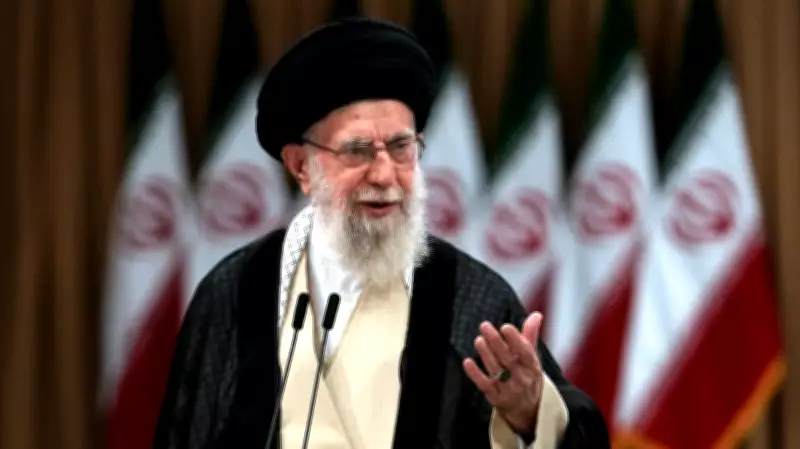
Ayatollah Ali Khamenei, the supreme leader of Iran for 36 years, was killed on Saturday in airstrikes conducted by Israel and the United States. The attacks targeted his central Tehran compound, pulverizing the site after decades of failed diplomatic efforts to resolve disputes over Iran's nuclear program. Iranian state media announced his death at the age of 86.
An Unlikely Rise to Power
Initially dismissed as weak and indecisive, Khamenei seemed an unlikely successor to the charismatic Ayatollah Ruhollah Khomeini, who founded the Islamic Republic of Iran. However, Khamenei's ascent to the pinnacle of Iran's power structure granted him a tight grip over the nation's affairs. Karim Sadjadpour of the Carnegie Endowment for International Peace described him as "an accident of history" who evolved from a weak president to one of the five most powerful Iranians of the last century.
Born in Mashhad in April 1939, Khamenei became a cleric at age 11 and studied in Iraq and Qom. His father, a religious scholar of Azeri descent, opposed mixing religion and politics, but Khamenei embraced the Islamist revolutionary cause. He served multiple prison terms for political activities, including severe torture in 1963. After the shah's fall, he held key posts, such as deputy minister of defense during the 1980-88 war with Iraq, which claimed an estimated one million lives.

Iron-Fisted Rule and Regional Influence
Khamenei's rule was marked by an iron fist domestically and an expansion of Iran's military sway across the Middle East. He maintained the hardline stance of Khomeini, quashing the ambitions of elected presidents who sought more open policies. His word was law, with enormous powers including command of the armed forces and authority to appoint senior figures like judiciary heads and Revolutionary Guard commanders.
He expanded Iranian influence by empowering Shi'ite militias in Iraq and Lebanon, propping up Bashar al-Assad in Syria, and supporting groups like Hamas and the Houthis in Yemen. This "Axis of Resistance" opposed Israeli and U.S. power, but by 2024, these alliances began to unravel with setbacks in Syria, Lebanon, and Gaza.
Nuclear Program and Anti-U.S. Stance
Khamenei long denied that Iran's nuclear program aimed to produce atomic weapons, as the West contended. In 2015, he cautiously supported a nuclear deal that curbed Iran's program in return for sanctions relief. However, his hostility toward the U.S. intensified in 2018 when the Trump administration withdrew from the agreement and reimposed sanctions. He often denounced "the Great Satan" in speeches, reinforcing anti-U.S. sentiment central to the 1979 revolution.
As Trump pressed for a new nuclear deal in 2025, Khamenei condemned "the rude and arrogant leaders of America," questioning their authority over Iran's enrichment activities. He issued a fatwa against nuclear weapons in the mid-1990s, calling it against Islamic thoughts, and upheld Khomeini's 1989 fatwa calling for the death of author Salman Rushdie.
Crackdowns on Domestic Unrest
Khamenei faced repeated unrest at home, including major protests in 1999, 2002, and 2009 after contested election results. In 2022, he cracked down on protesters enraged by the death of Mahsa Amini in morality police custody, blaming Western enemies and resorting to hangings and public displays of bodies. Scholars painted him as a secretive ideologue fearful of betrayal, fueled by a 1981 assassination attempt that paralyzed his right arm.
Legacy of Isolation and Uncertainty
Khamenei's rule ensured Iran's isolation, according to critics. He leaves an Islamic Republic grappling with uncertainty amid attacks from Israel and the U.S., as well as growing dissent, especially among younger generations. Mina, a 25-year-old jobless graduate from Lorestan province, expressed frustration in early 2026, saying policies focused on nuclear programs and regional hostility no longer make sense in a changed world.
The airstrikes that killed him followed warnings from the U.S. and Israel if Iran continued its nuclear and ballistic missile programs. Despite recent negotiations, Iran was unwilling to give up uranium enrichment, leading to the most ambitious attack on Iranian targets in decades.