Ireland's Government Faces No-Confidence Vote Over Fuel Protest Crisis
Ireland's government could face a critical no-confidence vote in Parliament on Tuesday, following widespread fuel protests that have disrupted oil supplies, blocked major ports, and caused extensive traffic jams across the country. The crisis stems from the U.S.-Israel war on Iran, which led to the closure of the Strait of Hormuz, a key global oil channel, sparking soaring fuel prices and public outrage.
Political Turmoil and Opposition Criticism
Prime Minister Micheál Martin has announced new tax cuts in an attempt to resolve the situation, but opposition parties have sharply criticized the government for its delayed response and inadequate aid measures. Sinn Fein, the largest opposition party, has called for the no-confidence vote scheduled for Tuesday evening. However, Martin's coalition government has preemptively scheduled an earlier vote of support, which, if passed, could render the no-confidence motion ineffective.
The passage of a no-confidence vote would force the ruling government to resign, potentially leading to Parliament selecting a new prime minister or triggering a general election. Several parties, including the Social Democrats, Labour, People Before Profit, Aontu, The Green Party, and Independent Ireland, have indicated they would support the motion.

Escalating Protests and Economic Impact
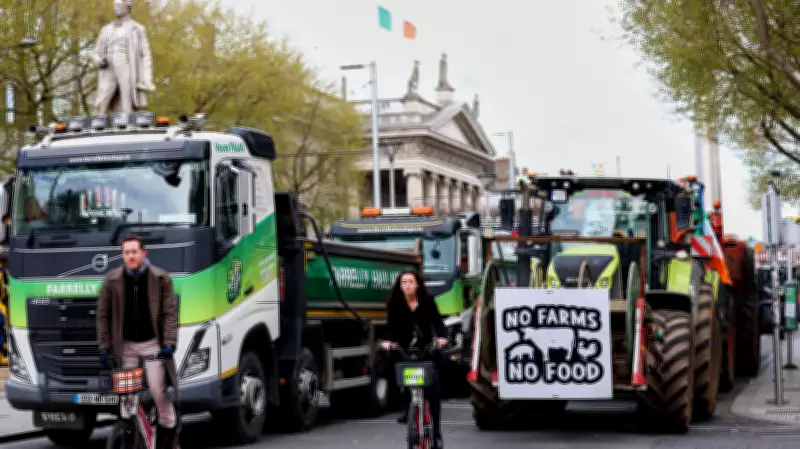
Protests began on April 7 with slow-moving convoys clogging roadways and quickly escalated as truckers, farmers, and taxi and bus operators used social media to organize blockades of key infrastructure, including the main thoroughfare in Dublin. Demonstrators have demanded price caps or tax cuts to alleviate the rising fuel costs, which they claim threaten to drive many out of business.
Martin acknowledged that the government can learn from the protests but defended the use of police and military to clear roadblocks at critical sites, such as the Whitegate oil refinery in County Cork and several depots. These actions were necessary, he argued, because blockades had caused over a third of gas pumps to run dry. "We had to clear Whitegate and the ports because we export about 90% of everything we make in this country," Martin stated. "The ports are the lifeblood of our economy, and prolonged blockades would have led to job losses and halted production, with very serious consequences."
Government Response and Legislative Measures
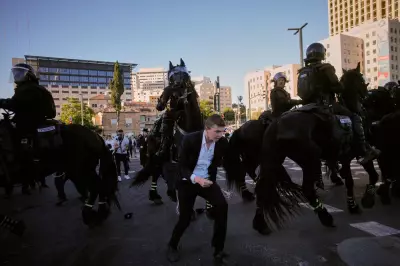
The demonstrations were initially tolerated but turned tense over the weekend when police used pepper spray in clashes with protesters, and an army truck dismantled a log barricade at Galway port. Despite this, many protesters felt they achieved their goal by forcing government compromise.
In addition to the political votes, lawmakers are scheduled to decide on a fuel support package worth 505 million euros (approximately $595 million), which Martin says will ease cost-of-living pressures. This package includes direct payments to truckers and school bus operators, along with fuel subsidies for agricultural and fishing industries, building on a 250 million euro tax break approved three weeks earlier.
Sinn Fein has criticized the Fianna Fáil and Fine Gael coalition for failing to protect citizens from the fuel price spike, not recalling Parliament during a holiday break to address the crisis, and offering what it describes as half-measures in response.