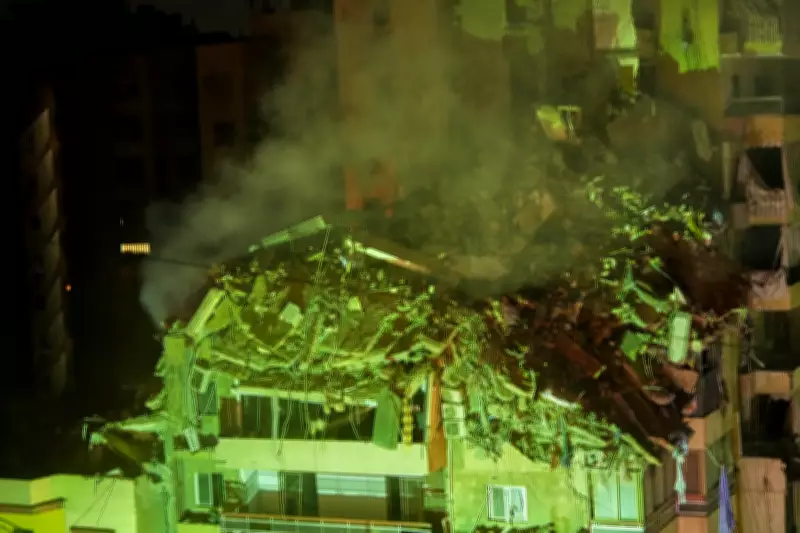
In a significant escalation, Israel conducted an airstrike on Beirut's southern suburbs for the first time since the ceasefire agreement, targeting the Dahiyeh district. The attack, which occurred on Wednesday, May 6, 2026, sent plumes of smoke rising from the rubble of a heavily damaged building, as captured by Associated Press photographer Hassan Ammar.
Details of the Strike
The Israeli military confirmed the strike, stating it was aimed at a Hezbollah weapons storage facility. This marks the first such attack on the Lebanese capital since the ceasefire was implemented, raising fears of a potential breakdown in the truce. Local officials reported no immediate casualties, but the blast caused significant structural damage to nearby buildings.
Regional Reactions
The Lebanese government condemned the attack as a violation of the ceasefire terms, calling for an emergency meeting of the United Nations Security Council. Hezbollah leaders vowed retaliation, though no immediate response was reported. Meanwhile, international mediators urged restraint, emphasizing the fragility of the peace agreement.

The strike comes amid heightened tensions in the region, with ongoing conflicts in Gaza and rising hostilities along the Israel-Lebanon border. Analysts warn that this action could trigger a broader confrontation, undermining months of diplomatic efforts to stabilize the area.
Broader Context
The ceasefire, brokered by the United States and France earlier this year, had largely held despite sporadic violations. This latest development threatens to unravel the agreement, potentially drawing in other regional actors. The United Nations Interim Force in Lebanon (UNIFIL) has called for an immediate de-escalation and urged both parties to return to dialogue.
As the situation unfolds, residents of Beirut's southern suburbs remain on edge, with many fearing a return to the devastating conflict that plagued the region in previous years. The international community watches closely, hoping to prevent a full-scale war.