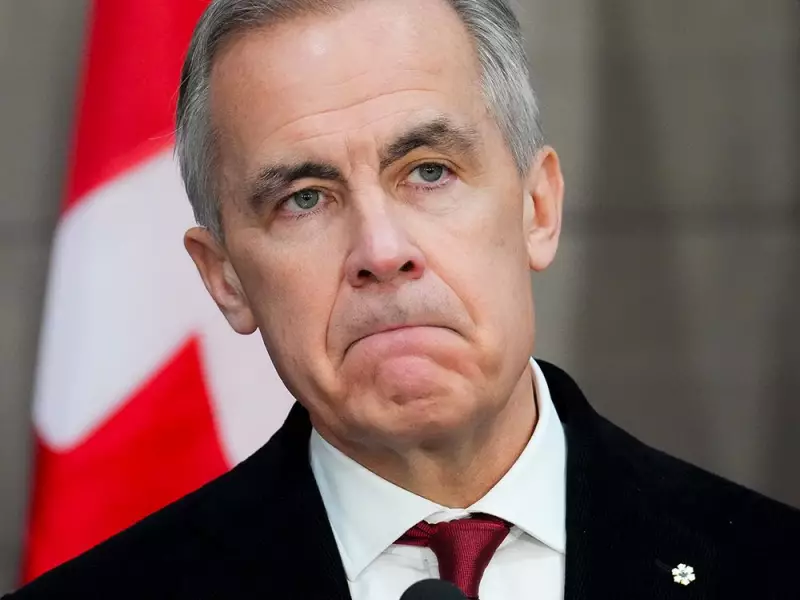
As Prime Minister Mark Carney conducted his series of year-end interviews, columnist John Ivison found himself drawing intriguing comparisons to a former Liberal leader while reading a biography of John Turner. The parallels, and the potential warnings they carry for the current prime minister, form the core of a new political analysis.
Parallels Between Two Liberal Leaders
Ivison notes that many qualities attributed to John Turner in a 1984 Saturday Night magazine profile could easily describe Mark Carney. The profile described Turner's personality as a balance between a deep fear of failure and a heroic conceit in his own abilities. It suggested his ambition and sense of superiority were constantly checked by insecurity and a sensitivity to criticism.
Both politicians have been labeled as business-oriented leaders who risked alienating the traditional left wing of the Liberal Party. However, their political fortunes have diverged sharply. While Turner's leadership was plagued by internal party mutinies, Carney has, thus far, faced minimal rebellion from the left flank of his caucus.

Contrasting Fortunes and Styles
The historical context of their leadership ascensions is markedly different. John Turner inherited a Liberal party in 1984 that was exhausted after 16 years under Pierre Trudeau and promptly lost the election that same year. In contrast, Mark Carney took over the party leadership after nearly 12 years of Justin Trudeau and led the Liberals to a general election victory in April 2025.
Their personal styles also stand in stark contrast. Turner was known for his lack of warmth on television and a reluctance to rely on political platitudes, traits that contributed to his downfall. Carney, as seen in his recent interview with Global TV's Dawna Friesen, exhibits no shortage of affability or confidence. Ivison suggests Carney would likely argue he is not vain, but rather acutely aware that he is a unique figure in Canadian politics.
The Risk of Hubris in High Office
Ivison's column posits that Carney's potential vulnerability may stem from this very sense of uniqueness and confidence. The prime minister told Friesen that Canada is in a better position now than it was nine months ago, when he first took office, and expressed certainty that his plan will guide the country through a crisis prompted by fundamental policy changes in the United States.
While Carney currently enjoys a charmed relationship with the media, his caucus, and voters, Ivison implies that Turner's experience serves as a cautionary tale. Turner, according to historian Paul Litt's biography Elusive Destiny, believed he was owed a degree of deference and should not have to work for it—a sentiment that damaged his relations with key groups.
Polls reflect a complex public perception of the new prime minister. While most voters express confidence in Carney's ability to manage the economy, one survey indicates his disapproval rating has reached its highest level since he assumed office. This mixed signal underscores the fragile nature of political capital, even for a leader who entered with significant economic credibility.
Ivison's analysis, published on December 30, 2025, ultimately frames Carney's political narrative as one where his greatest strength—his unshakeable belief in his own unique capacity to lead—could also be the source of a conceivable tragic fall, should it cross into the territory of hubris.