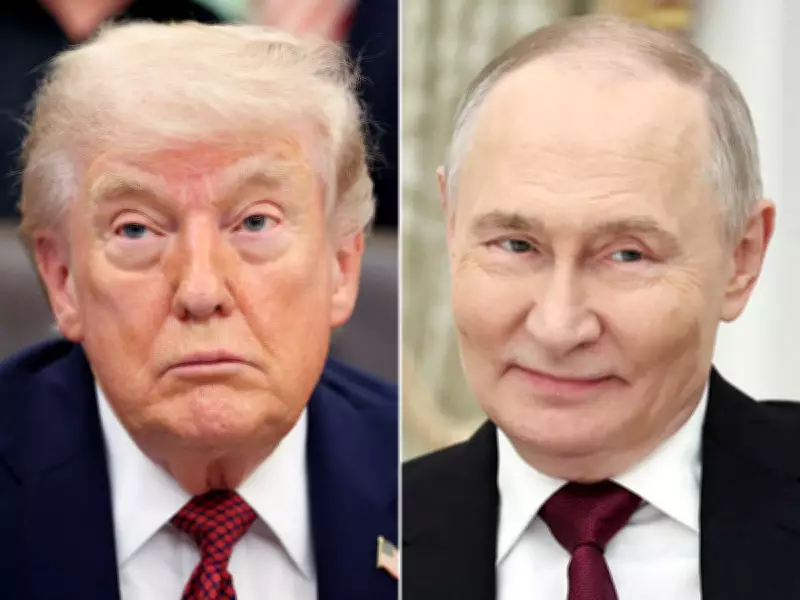
A recent Harvard report suggests that Vladimir Putin sees a window of opportunity while Donald Trump is still in office to shatter NATO. The report indicates that Trump's ambivalent stance toward the alliance and his tacit approval of Putin's attempts to undermine NATO's solidarity embolden the Russian dictator to continue moving forward until he is convinced the price is not worth the risk.
Trump's Warning on Troop Reductions
A pessimist could construe Donald Trump's warning about American troop reductions in Germany as a less brazen modern equivalent to the non-aggression Molotov-Ribbentrop Pact between Nazi Germany and the Soviet Union in 1939. The U.S. president is involved in a spat with German Chancellor Friedrich Merz over his conduct in the war with Iran and has said the Pentagon is “studying and reviewing” the impact of the up to 50,000 troops stationed in Germany.
Troop reductions would be a gift to Vladimir Putin: a signal that the Americans have washed their hands of Europe and the Russians can do as they please in their new sphere of influence. However, it is not quite as clear cut as all that. On the same day Trump posted his threat on social media, the U.S. updated its bilateral strategic agreement with Poland, with both sides committing to “mutual self-defence and deterrence.” The U.S. still has around 10,000 troops in Poland and there is the prospect that, if some are removed from Germany, they could be re-deployed on Polish soil. President Karol Nawrocki has demonstrated strong sympathy and ideological alignment with Trump, which has helped the Poles deflect some of the ill-will coming from Washington.

Bilateral Deals and NATO Commitments
The Americans have similar bilateral self-defence deals with the Baltic States to supplement the collective defence agreement in NATO. But it remains unclear whether those deals carry any more weight than America's commitments as a partner in NATO. That is of obvious concern to Canada, which leads a multinational brigade in Latvia as part of Operation Reassurance. No one in Eastern Europe is feeling particularly reassured right now.
Donald Tusk, the Polish prime minister, told the Financial Times this week that the “biggest, most important question” is whether the U.S. is ready to be a loyal NATO partner, were Russia to attack. A senior diplomatic source in Warsaw said he is “extremely troubled and even scared” by the noises coming out of Washington.
Upcoming NATO Summit and Potential Consequences
NATO leaders are set to meet at a summit in Ankara, Turkey, in July, and Trump has already threatened consequences for nations that failed to support him in the Iran war – i.e., everyone else. Reports have already emerged of the U.S. reviewing its support for the U.K.'s sovereignty of the Falkland Islands, which could encourage Argentinian ambitions to take them back. Meanwhile, Trump has been explicit about repercussions for Italy and Spain.
A 2023 law (ironically introduced by now U.S. Secretary of State Marco Rubio) restricts the president from unilaterally withdrawing from NATO without Congressional approval. But he doesn't have to withdraw. Were the Russians to cross the Narva River in Estonia and take the city of the same name, as Carlo Masala's book If Russia Wins envisages, the Estonians would likely invoke NATO's Article 5, which deems an attack on one as an attack on all.
In conclusion, the combination of Trump's ambivalence and Putin's emboldened posture creates a precarious situation for NATO's unity and the security of Eastern Europe. The upcoming summit in Ankara will be a critical test of the alliance's cohesion and the U.S.'s commitment to its allies.