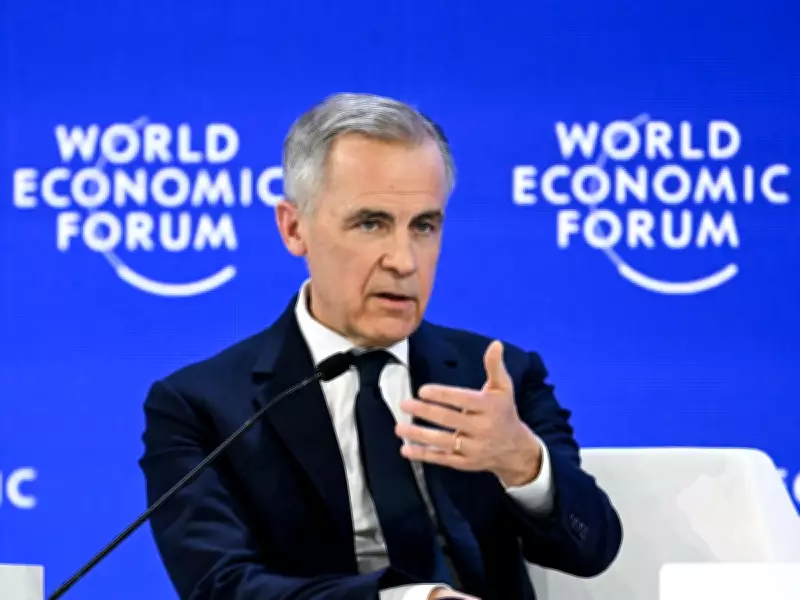
Joe Oliver argues that the political ideology of Prime Minister Mark Carney and his government cannot be adequately defined by traditional right-left vocabulary. Instead, it is best described as corporatism or stakeholder capitalism as espoused by the World Economic Forum (WEF) and the Davos elites. This philosophical approach to the economy may be unfamiliar to most Canadians, but it influences how Carney governs and has important implications for democratic accountability and individual prosperity.
WEF's Influence on Western Governance
The WEF has exercised enormous influence over western governance during the past five decades. Its founder, Klaus Schwab, once boasted about penetrating Justin Trudeau's cabinet, more than half of whose members went through WEF leadership programs. In a recent Substack article, physician and scientist Robert W. Malone outlines the WEF's three underlying assumptions: first, that major problems facing humanity are global and require international coordination; second, that such coordination is best achieved through a network of leaders from business, labor, government, and civil society; and third, that private companies are instruments of public purpose and should be accountable to stakeholders rather than just shareholders.
Corporatism vs. Liberal Capitalism
Malone points out that while corporatism shares with fascism the belief that the economy should be coordinated by various elites, it is not fascist: it is internationalist rather than nationalist and not violent, militarist, or racist. It aligns comfortably with the Chinese Communist Party in its support for elite planning, the role of private enterprise in advancing public objectives, and the preference for technocratic management over elected decision-makers. However, it rejects proletarian ideology and extensive state ownership, envisaging a key role for large corporate participants.

Corporatism's assumptions counter the historical liberal worldview based on consent of the governed, institutional accountability, and rule of law. It differs from the free enterprise market economy where companies are accountable to shareholders who focus on profitability rather than external managerial direction that takes into account broader societal objectives.
Problems with the WEF Model
The problems with the noblesse oblige WEF model are both philosophical and practical. It undermines democratic and constitutional governance by empowering unaccountable actors with self-serving and ideological agendas and by embedding bureaucratic structures that are hard to dismantle by normal electoral means. Instead of market discipline, it relies on technocratic and state judgment to pick winners and losers and imposes a costly regulatory burden that increases risk and drives away capital. The effect is to undermine productivity and weaken economic performance.
Europe, which is both culturally and intellectually receptive to the WEF, has implemented these principles in binding legislation through the EU Commission. Not surprisingly, the EU's prioritizing of welfare, climate action, and regulatory intrusion in the marketplace has caused its GDP per capita to fall significantly behind the U.S. Although Liberals hate to hear that Canada has lagged its southern neighbor for similar reasons, the data are irrefutable.