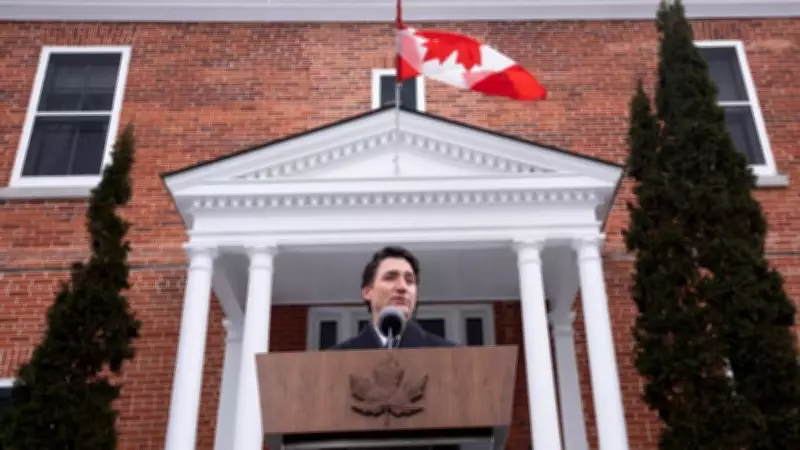
Justin Trudeau Resigns: A Comprehensive Retrospective on His Political Journey
In a significant development for Canadian politics, Justin Trudeau has announced his resignation, marking the end of an historic tenure that spanned nearly a decade as Prime Minister and 18 years in public service. This decision concludes a leadership era defined by transformative policies, intense political battles, and a profound impact on the nation's direction. As the political landscape shifts, it is an opportune moment to reflect on the career-defining moments that shaped Trudeau's legacy and left an indelible mark on Canada.
The Early Years and Rise to Power
Justin Trudeau's political journey began long before his election as Prime Minister in 2015. Born into a political dynasty as the son of former Prime Minister Pierre Trudeau, he initially pursued careers in teaching and public speaking before entering politics. His election as the Member of Parliament for Papineau in 2008 marked the start of his formal political career, where he quickly gained attention for his charismatic style and progressive ideals. In 2013, he assumed leadership of the Liberal Party, revitalizing it with a message of hope and change that resonated with a broad spectrum of Canadians.
Trudeau's historic victory in the 2015 federal election, which saw the Liberals secure a majority government, was a defining moment. Campaigning on platforms of inclusivity, environmental action, and middle-class prosperity, he promised "sunny ways" and a break from the previous Conservative administration. This win not only ended nearly a decade of Conservative rule but also positioned Trudeau as a global symbol of progressive leadership, attracting international acclaim and scrutiny alike.

Key Policy Achievements and Challenges
Throughout his tenure, Trudeau championed several landmark policies that reshaped Canadian society. The legalization of cannabis in 2018 was a groundbreaking move, making Canada the first G7 nation to do so and addressing long-standing issues in criminal justice and public health. His government also implemented the Canada Child Benefit, which provided financial support to families and was credited with reducing child poverty rates significantly. In climate policy, Trudeau introduced carbon pricing mechanisms and committed to ambitious emissions reduction targets, though these efforts faced criticism from both environmental advocates and industry stakeholders.
However, Trudeau's leadership was not without controversy. The SNC-Lavalin affair in 2019, where he was accused of political interference in a criminal case, led to a significant decline in public trust and resulted in the resignation of key cabinet members. His handling of Indigenous reconciliation, while including apologies and funding initiatives, was often criticized as insufficient by Indigenous communities. Additionally, economic challenges such as housing affordability and inflation posed ongoing hurdles, testing his government's resilience and adaptability in a rapidly changing world.
International Relations and Global Influence
On the global stage, Trudeau positioned Canada as a leader in multilateralism and humanitarian efforts. He played a pivotal role in renegotiating the North American Free Trade Agreement, resulting in the United States-Mexico-Canada Agreement (USMCA), which aimed to modernize trade relations while protecting Canadian interests. His advocacy for gender equality, including appointing Canada's first gender-balanced cabinet, earned praise internationally, though it also faced backlash from opponents who questioned its practicality.
Trudeau's response to global crises, such as the COVID-19 pandemic, involved substantial economic support packages like the Canada Emergency Response Benefit (CERB), which helped millions of Canadians but also contributed to rising national debt. His foreign policy, including strained relations with China and support for Ukraine amid conflicts, showcased a commitment to democratic values but sometimes led to diplomatic tensions. These actions underscored his vision of Canada as a proactive player in international affairs, balancing idealism with pragmatic challenges.

Legacy and the Future of Canadian Politics
As Justin Trudeau steps down, his legacy is a complex tapestry of achievements and setbacks. Supporters highlight his efforts to promote diversity, combat climate change, and strengthen social programs, arguing that he modernized Canada's political discourse and inspired a new generation of leaders. Critics point to issues like fiscal management, ethical controversies, and regional divisions, suggesting that his tenure exacerbated political polarization. Regardless of perspective, his resignation signals a pivotal moment for the Liberal Party and Canadian politics as a whole, with implications for upcoming elections and policy directions.
Looking ahead, the transition in leadership will test the stability of the Liberal Party and its ability to maintain unity in a competitive political environment. Potential successors will need to address ongoing challenges such as economic uncertainty, healthcare reform, and environmental sustainability, while navigating the legacy Trudeau leaves behind. His resignation not only closes a chapter in Canadian history but also opens new debates about the future of governance, leadership, and national identity in an era of rapid change and global interconnectedness.