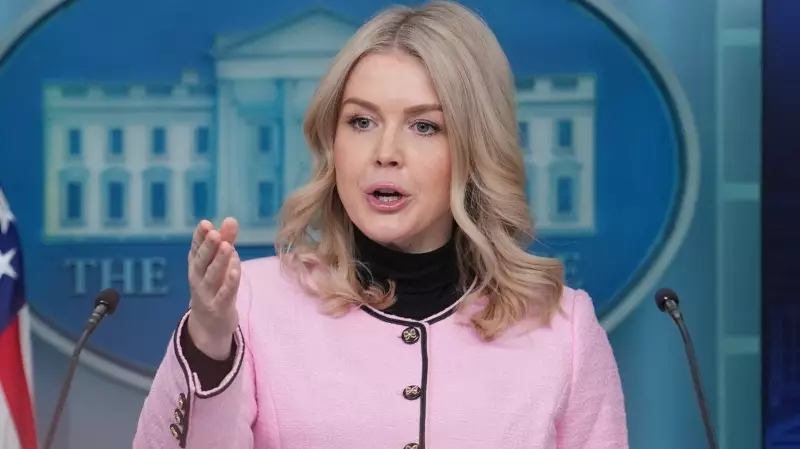
White House press secretary Karoline Leavitt found herself at the centre of an unexpected fashion controversy this week, with critics drawing striking parallels between her attire and the signature look of a prominent North Korean state television anchor.
Social Media Erupts with Comparisons
The incident occurred during a White House press briefing on Wednesday. Observers on social media platforms, particularly X (formerly Twitter), were quick to note that the colour and style of Leavitt's outfit bore a strong resemblance to the iconic dresses worn by Ri Chun-hee, a news anchor for North Korean state TV.
Ri is famous for her bombastic, fervently patriotic broadcasts in defence of the country's leader, Kim Jong Un. Her segments have frequently gone viral online in the West, often presented as examples of state propaganda.

Jokes and Altered Images Spread Rapidly
Journalist Aaron Rupar ignited the online discussion with a post on X that garnered over 300,000 views. "Leavitt was wearing Ri Chun-hee’s outfit today," he joked. Writer Hemant Mehta echoed this, stating, "Probably doesn’t help that she’s wearing the North Korean news anchor colors while saying this."
The comparison did not stop at clothing. Some users took the joke further by sharing altered images that superimposed Leavitt's face onto Ri's broadcasts. They argued that beyond the visual similarity, the messaging style of the two figures could also be viewed as strikingly aligned. This online reaction comes amid longstanding accusations from critics who allege Leavitt delivers propaganda-style statements for her boss, former President Donald Trump.
Context and Lasting Impressions
The timing of the incident is notable, as Leavitt recently announced she is expecting her second child. However, the focus remained squarely on the perceived aesthetic and rhetorical parallels with North Korean state media. The event underscores how visual symbolism in political communication can trigger immediate and widespread public interpretation, often amplified through the lens of satire on social media.
While intended as humour, the comparisons highlight deeper criticisms of the current political discourse and the performative aspects of modern press briefings. The incident demonstrates the powerful and instantaneous role social media plays in framing political narratives, often blending serious critique with viral mockery.