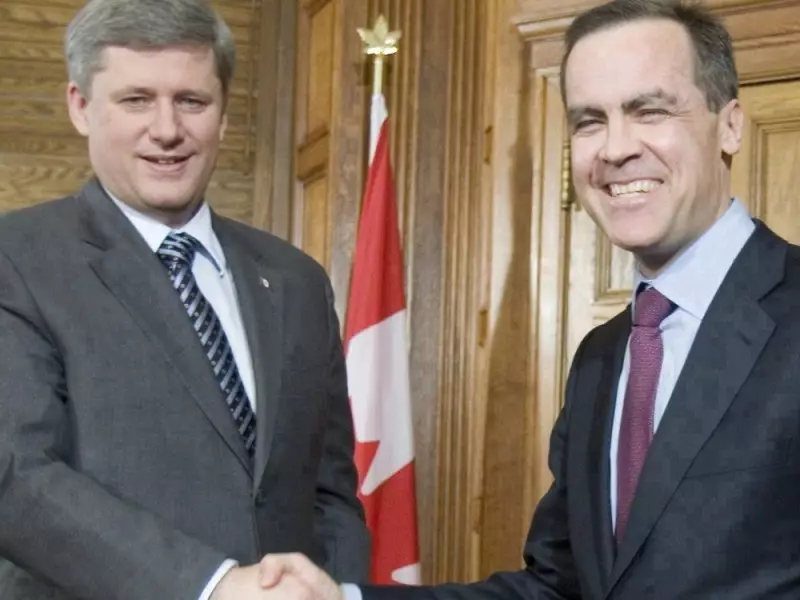
In a notable political shift, the federal Liberal government has begun to reintroduce a series of policy approaches that mirror those of the former Conservative government under Stephen Harper, which they had aggressively reversed upon taking power in 2015.
The Carbon Pricing Pivot
One of the most significant reversals concerns climate policy. As prime minister, Stephen Harper consistently opposed a federally mandated consumer carbon tax, viewing it as a revenue tool rather than an effective environmental measure. His government briefly considered a "cap and trade" system after the 2008 election, a market-based approach where industries trade emissions credits, but ultimately shelved the plan.
Now, under Prime Minister Mark Carney, the Liberals have taken a similar path. One of Carney's first actions after being sworn in on March 14, 2026, was to eliminate the federal consumer carbon tax. In its place, his government is advancing an "industrial carbon price". This policy, much like Harper's proposed cap and trade, is designed to increase costs associated with fossil fuel use but in a less visible manner, avoiding direct charges on consumer receipts or home heating bills.

Energy and Pipeline Politics
The shift extends to energy infrastructure. The recent Memorandum of Understanding (MOU) between the Carney government and Alberta commits to building a second bitumen pipeline from Alberta to the Pacific Coast. This move echoes the spirit of the Northern Gateway pipeline project, which received approval under Harper in 2014 only to be cancelled by Prime Minister Justin Trudeau in 2016.
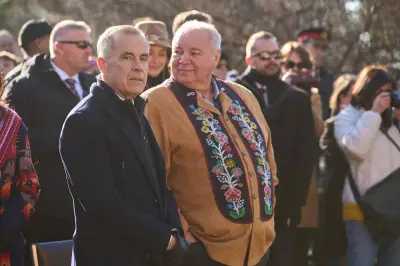
The new MOU emphasizes heavy Indigenous buy-in and participation, conditions that also align with the original framework discussed for Northern Gateway. While the specific route remains undefined, the commitment marks a clear departure from the Liberal stance of less than a decade ago.
A Return to Pragmatism?
This quiet adoption of former Conservative policies suggests a pragmatic recalibration. After nearly a decade in power, the Liberal government appears to be integrating approaches that, while once criticized, have proven politically or practically resilient. The Carney administration's style remains distinct from Harper's, yet several core Conservative ideas have undeniably seeped back into the federal policy landscape.
The return of these frameworks highlights how governing realities often transcend partisan rhetoric, leading to unexpected continuities in Canadian federal policy across different political eras.