Marco Rubio's Munich Security Conference Appearance
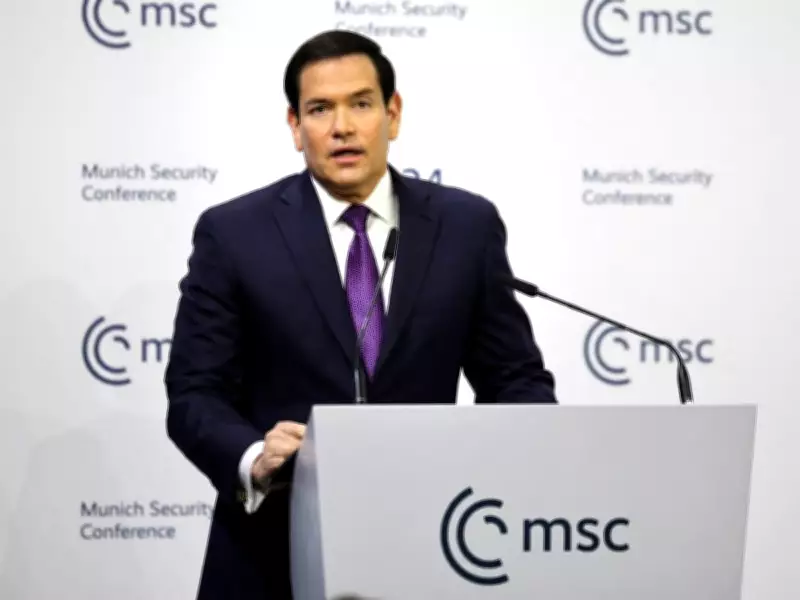
U.S. Secretary of State Marco Rubio recently took the stage at the Munich Security Conference in Germany, delivering a significant address that aimed to mend fences after controversial actions by his boss, President Donald Trump. The event, held in February 2026, saw Rubio step away from his multiple roles, including chief archivist and national security adviser, to focus on international diplomacy.
A Serious Figure in a Tumultuous Administration
Unlike many in the Trump administration, Rubio is recognized as a bona fide serious person who deeply cares about policy. Despite being constrained by Trump's presidency, he stands out for his earnest approach in a team often criticized for social media trolling. His speech in Munich was an attempt to offer a grown-up argument about America's role in the Western alliance, contrasting sharply with Vice President JD Vance's previous inflammatory remarks at the same conference.
Repairing Damage and Presenting a Vision
Rubio's primary goal was to address the fallout from Trump's threats, such as the proposal to seize Greenland from Denmark, which jeopardized the North Atlantic alliance. He used conciliatory language to advocate for a coherent theory of Western Civilization, arguing that America and Europe have embraced policies leading to managed decline since the 1990s. Key points in his case include:

- Criticism of European free-riding on U.S. military power.
- Concerns over erosion of national sovereignty due to free trade and mass migration.
- A call for reversing de-industrialization and strengthening global power dynamics.
Rubio emphasized that armies fight for tangible entities like people and nations, not abstractions, though he acknowledged that concepts like freedom and democracy are vital to defining a way of life.
Contrasts and Criticisms
While Rubio's serious tone was refreshing, his arguments faced scrutiny. Critics note that Western Civilization and nations are themselves abstractions, and his economic claims—such as blaming manufacturing job losses on immigration rather than automation—may be oversimplified. Additionally, data shows that the U.S. economy has grown relative to Europe's, challenging the narrative of being ripped off.
Despite these issues, Rubio's effort to present a principled foreign policy in an administration often dismissive of rule-of-law concerns marks a notable departure. His speech underscores the ongoing tensions within Trump's team between pragmatic diplomacy and populist rhetoric.