Prime Minister Mark Carney's Foreign Policy Reversals Spark Intense Scrutiny
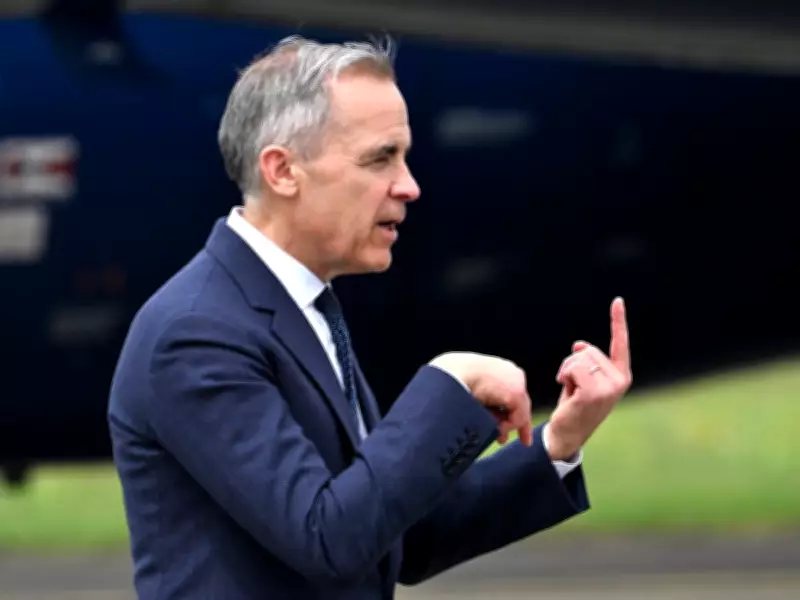
In a stunning display of political volatility, Prime Minister Mark Carney has executed several dramatic policy reversals that have left observers questioning his consistency on critical international matters. The most recent example involves Canada's position on military action against Iran, where Carney's stance shifted dramatically within just three days.
Rapid Reversal on Iran Military Action
On Saturday, March 5, 2026, Prime Minister Carney issued a statement supporting U.S.-led airstrikes against Iran following reports that Iranian Supreme Leader Ali Khamenei had been killed in the opening barrage. "Canada supports the United States acting to prevent Iran from obtaining a nuclear weapon and to prevent its regime from further threatening international peace and security," the statement declared.
However, by Tuesday, Carney had completely reversed his position, accusing the United States and Israel of acting illegally without United Nations approval or consultation with allies including Canada. His second statement acknowledged that "two decades of negotiations and diplomatic efforts" had failed to stop Iran's nuclear ambitions but concluded that "rapid de-escalation" followed by more diplomacy represented the proper solution.

"Diplomatic engagement is essential to avoid a wider and deeper conflict," Carney wrote in his revised position. Adding to the confusion, the Prime Minister later told a press conference in Australia that "one can never categorically rule out" Canadian military participation in the Iran conflict, suggesting yet another potential shift in his administration's approach.
A Pattern of Political Turnarounds
While political careers typically involve some degree of policy evolution, Carney's reversals have been particularly brazen and frequent. In just twelve months as a professional politician, he has overseen several dramatic and unexplained policy turnarounds, primarily in the realm of foreign affairs.
Political analysts note that Carney's approach to governance has become characterized by sudden shifts that often leave both allies and opponents struggling to understand Canada's official position on critical international matters.
Dramatic Shift on U.S. Relations
One of Carney's most significant reversals concerns his position on U.S. President Donald Trump and American relations. During the 2025 election campaign, Carney positioned himself as the candidate best equipped to confront what he portrayed as American expansionist ambitions.
In an April campaign speech, Carney famously declared: "The U.S. wants our land, wants our resources, wants our water, wants our country." He further accused Conservative Leader Pierre Poilievre of "worshipping at the altar of Donald Trump," positioning himself as the defender of Canadian sovereignty against perceived American threats.
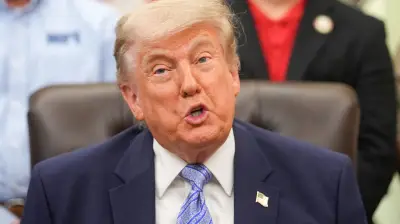
However, once elected, Carney's approach underwent a complete transformation. During a May visit to the White House, he delivered extended praise for Trump's leadership directly to the American president in front of news cameras. "You're a transformational president," Carney stated, before listing accomplishments including a "relentless focus on the American worker" and "ending the scourge of fentanyl."
Political Implications and Public Perception
Multiple polls reveal that Carney's political base remains disproportionately composed of voters who believe U.S. relations represent Canada's most important issue. In contrast, Conservative supporters typically prioritize "unaffordability" or "crime," with U.S. relations barely making their top ten concerns.
This polling data suggests that Carney's initial anti-Trump positioning resonated strongly with his core supporters, making his subsequent reversal particularly noteworthy. Political observers question whether such dramatic shifts represent strategic flexibility or a concerning lack of consistent principles in foreign policy matters.
The Prime Minister's office has not provided detailed explanations for these policy reversals, leaving political analysts and the public to speculate about the reasoning behind such significant changes in position on matters of international importance.