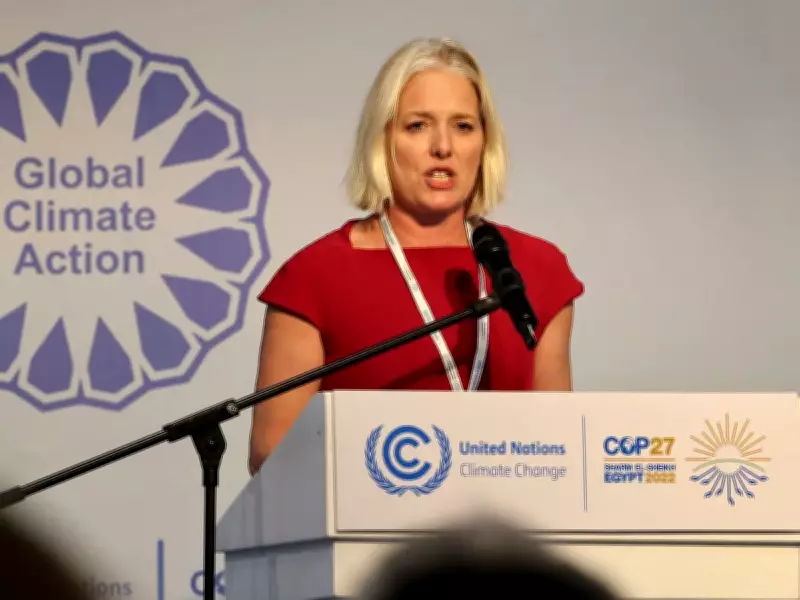
With Steven Guilbeault no longer in cabinet, former environment minister Catherine McKenna says Liberals who are genuinely committed to addressing the climate crisis need to make their voices heard. McKenna entered the House of Commons on Wednesday to show support for her former colleague.
The departure of Guilbeault, who served as the Liberal Party's most prominent advocate for environmental issues, has prompted questions among progressives about the future of climate policy under Prime Minister Mark Carney. Green Party Leader Elizabeth May, who previously helped sustain the minority Liberal government in exchange for Carney's support on climate targets, expressed her dismay on Wednesday after attempting to persuade Guilbeault to remain in his role.
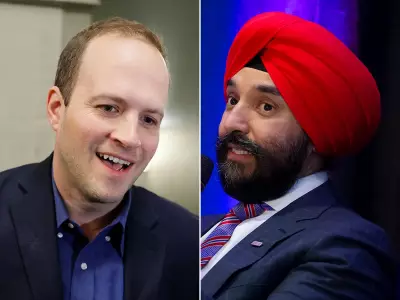
May did not disclose details of their conversation, other than to say she "mostly cried." She lamented the loss of strong environmental voices within the Liberal caucus, including Jonathan Wilkinson and Nathaniel Erskine-Smith, and questioned whether there remains a place for climate advocates in the party.

May, who considers Guilbeault a friend, described herself as "heartbroken" over his departure, praising him as a person of "great integrity and courage." She grew emotional while hinting that she no longer recognizes the Carney she knew from his time as UN climate envoy before entering politics.
"I wonder who Mark Carney is," May said. "And I think my friend Steven Guilbeault is probably wondering when did Carney change? When did the Liberal platform become a Conservative platform?"
Carney has defended his environmental record by pointing to his past role at the United Nations. However, his agreement with Alberta Premier Danielle Smith to facilitate a new oil pipeline to the West Coast in exchange for an increased industrial carbon tax has drawn criticism. Guilbeault, whom Carney had appointed as heritage minister after the last election, resigned from cabinet the day that deal was signed.
Since then, Guilbeault has spoken out against what he views as the dismantling of key climate policies, including a weakened industrial carbon tax, cancellation of a planned cap on oil and gas emissions, scrapping of a national electric vehicle mandate, and signals of openness to repealing parts of the oil tanker moratorium off British Columbia's northwest coast.
Carney has defended these changes by advocating for an approach that emphasizes infrastructure development and clean technology over regulation and restriction. He has also sought to balance his pledge to transform Canada into an "energy superpower" with support for conventional energy projects, linking approval of a new oil pipeline to the construction of a multi-billion dollar carbon capture and storage network proposed by oilsands companies to produce "decarbonized oil."