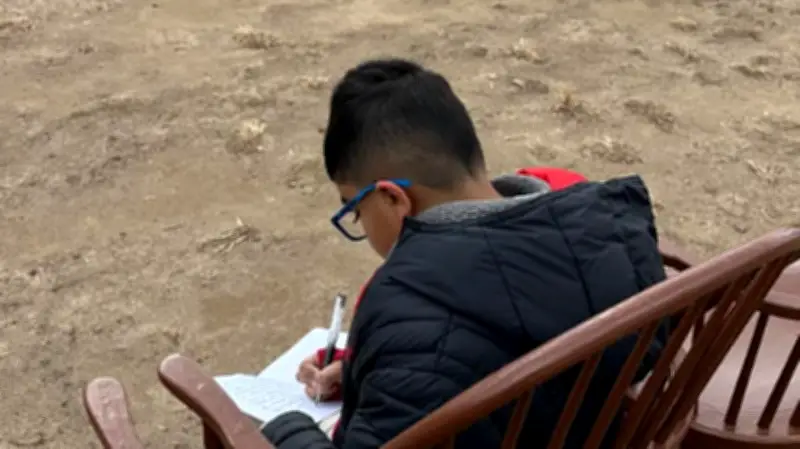
Ami J. Shah's 9-year-old son Tayz recently faced his first editorial revision decline. The piece was for an elementary school literary magazine, with an editorial board of teachers and administrators. The stakes were low, but adults debated the political implications of a fourth grader's writing.
The Invitation and the Essay
The invitation was broad: students could submit a story, poem, article, drawing, or reflection. Tayz chose to write a letter to George Washington. He imagined explaining the country 250 years after independence, covering technology, climate change, voting rights, and misinformation.
The Controversial Paragraph
The paragraph that sparked debate read: “Our current president wants to make it a Limited States of America, only offering good things to a few people that he likes, instead of all Americans.” Shah felt parental pride at his synthesis and critique, but also grief that her 9-year-old had absorbed the national mood.

The School's Response
The editor emailed Shah, explaining that school leadership felt the paragraph was too political and could generate backlash. She valued free expression and wanted to speak directly with Tayz. Shah understood their position but wasn't sure they understood his.
A Lesson in Balance
Shah realized this couldn't be a lesson in outrage. She didn't want Tayz to learn that disagreement equals suppression, nor that institutions must publish every thought. But she didn't want him embarrassed for thinking deeply. She taught him that voice matters, but platforms have boundaries, and editing isn't always erasure.
Tayz's Decision
Tayz decided not to revise the paragraph. He accepted the consequence: the piece wouldn't appear in the magazine. He suggested submitting it to The New York Times. Shah gently discouraged that, and he laughed, then said he might study law and enter politics. Shah remains unsure whether to be encouraged or concerned.
Reflection
The magazine will print without his piece. Life continues with field trips and spelling tests. Shah suspects she will remember this longer than Tayz. She realized her child was beginning to locate himself inside history, not just learning it.