Myanmar's Former President Released from Post-Coup Detention
In a notable shift within Myanmar's turbulent political environment, the country's former president has been freed from detention imposed after the military seized power in a 2021 coup. This development coincides with a reduction in the prison sentence of ousted leader Aung San Suu Kyi, signaling potential changes in the junta's approach to high-profile detainees.
Details of the Release and Sentence Reduction
The former president, whose identity is confirmed by international reports, was detained alongside numerous other officials when the military overthrew the civilian government. His release marks one of the most significant concessions by the ruling junta since it took control. Simultaneously, Aung San Suu Kyi, the Nobel Peace Prize laureate and former state counsellor, has had her lengthy prison term shortened, though specific details regarding the new sentence length remain undisclosed.
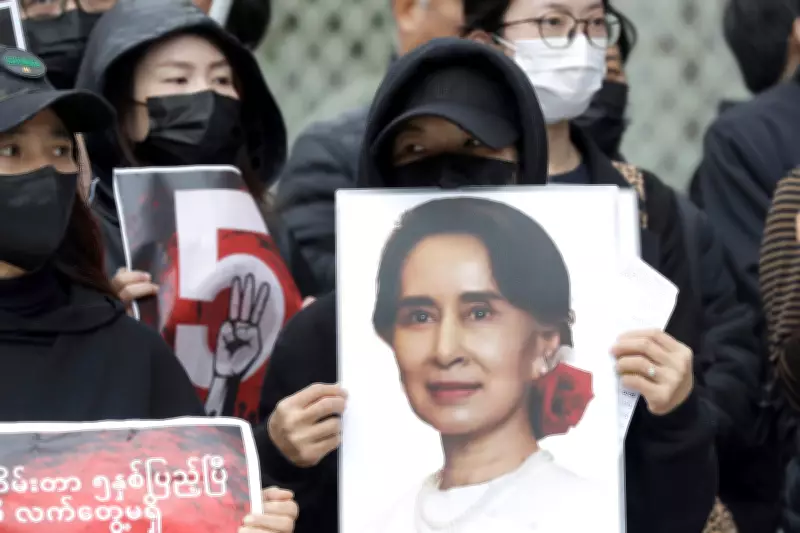
These actions occur against a backdrop of ongoing resistance and international pressure. Protests continue in various forms, including demonstrations by Myanmar nationals abroad. For instance, in February 2026, supporters in New Taipei City, Taiwan, gathered with portraits of Suu Kyi to mark the fifth anniversary of military rule, highlighting the persistent global solidarity with Myanmar's democratic movement.

Context of Military Rule and International Response
The military coup in February 2021 plunged Myanmar into chaos, leading to widespread arrests, violence, and economic decline. Aung San Suu Kyi was subsequently convicted on multiple charges, which critics describe as politically motivated, resulting in a cumulative prison sentence of decades. The junta has faced condemnation from the United Nations, Western nations, and human rights organizations for its actions, including alleged atrocities against civilians.
The release of the former president and the reduction of Suu Kyi's sentence may be interpreted as an attempt by the military government to ease international isolation or address internal pressures. However, analysts caution that this does not necessarily indicate a move toward restoring democracy, as the junta retains firm control and has suppressed dissent through force.
Broader Implications for Myanmar's Future
This development raises questions about the junta's long-term strategy. While some view it as a positive step, others remain skeptical, noting that many political prisoners remain incarcerated and human rights abuses persist. The situation in Myanmar continues to be fluid, with ongoing conflicts between the military and ethnic armed groups, as well as a resilient civil disobedience movement.
International observers are closely monitoring these changes, assessing whether they represent genuine progress or mere tactical adjustments by the regime. The fate of Aung San Suu Kyi, a symbol of Myanmar's struggle for democracy, remains a key barometer for the country's political trajectory. As events unfold, the global community watches for further signs of reconciliation or escalation in one of Southeast Asia's most protracted crises.