Alberta NDP Leader Faces Political Nightmare from Radical Federal Counterpart
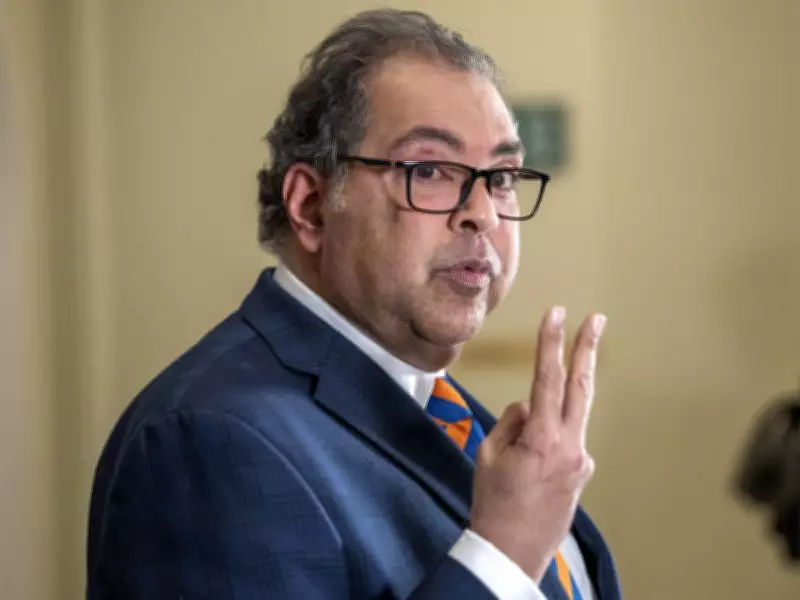
Naheed Nenshi, leader of the Alberta New Democratic Party, finds himself in a challenging political position as newly-elected federal NDP leader Avi Lewis emerges as what political observers describe as his worst nightmare. The situation has created significant tension within Alberta's political landscape, with Premier Danielle Smith and the United Conservative Party actively working to tie the two NDP leaders together despite their apparent differences.
The Radical Federal Shift
Avi Lewis represents a sharp turn to the left for the federal New Democratic Party, a shift so pronounced that Premier Smith has publicly labeled him as "pretty communist" and a "radical eco-socialist." Lewis has made clear his opposition to new fossil fuel infrastructure, stating he doesn't want "dirty pipelines" or further fossil fuel development, positions that directly conflict with Alberta's economic interests.
This ideological stance has forced Nenshi to act quickly to distance himself from his federal counterpart. Within mere seconds of being questioned about Lewis during a weekend media appearance, Nenshi emphasized that the federal NDP under Lewis would pursue directions "not in the interests of Albertans." He further clarified that he is not even a member of the federal NDP, nor are many Alberta NDP members.

Pipeline Politics and Provincial Positioning
Nenshi has taken pains to establish his pro-pipeline credentials, stating emphatically: "I want a pipeline to the west coast. I want to look at a pipeline going east. I want to look at pipelines going in all directions." His language on energy infrastructure sounds remarkably similar to that of Premier Smith, though he maintains he is "stronger and smarter" than the current premier.
The Alberta NDP leader insists his primary political battle is with Smith and what he characterizes as "the separatist UCP," claiming he doesn't really care what Lewis and the federal NDP say or do. However, this attempted distancing has proven difficult as Smith and UCP members actively promote their political equation: "Nenshi is Lewis, Lewis is Nenshi, and the NDP is the NDP."
UCP's Political Strategy
The United Conservative Party has wasted no time capitalizing on Lewis's election. UCP members of the legislature consistently refer to Lewis as Nenshi's "new anti-pipeline boss" and highlight Lewis's public statements expressing devotion to Nenshi's political success. They quote Lewis saying he wants Nenshi to be the next premier of Alberta and describing them as "kindred souls in spirit" who share "fundamental values."
Standing in the legislature, Premier Smith has claimed Nenshi isn't genuinely upset about Lewis's victory, suggesting the Alberta NDP leader could have mobilized his substantial support base to prevent Lewis from winning the federal leadership. Smith pointed out that Nenshi received more votes in his Alberta leadership victory than Lewis did in his federal race.
Escalating Rhetoric and Political Implications
The political tension escalated further when Smith, during a news conference, elaborated on her characterization of Lewis as a "radical eco-socialist" who advocates for nationalizing everything from food production to construction companies. She criticized his vision of having "everyone to have a heat pump and take an EV bus to work," positions she framed as fundamentally incompatible with Alberta's economic reality.
Nenshi notably did not attend the federal NDP convention in Winnipeg where Lewis's victory was announced, though some NDP members of the Alberta legislature did participate. This absence has been interpreted as a deliberate attempt to maintain separation between the provincial and federal parties.

Despite Nenshi's efforts to "dress up the NDP" as distinct from its federal counterpart, UCP legislators maintain that the NDP is now fundamentally the party of Avi Lewis. Every public statement from Lewis expressing support for Nenshi becomes political ammunition for the UCP, creating what appears to be an ongoing political challenge for the Alberta NDP leader as he navigates the complex relationship between provincial priorities and federal party dynamics.