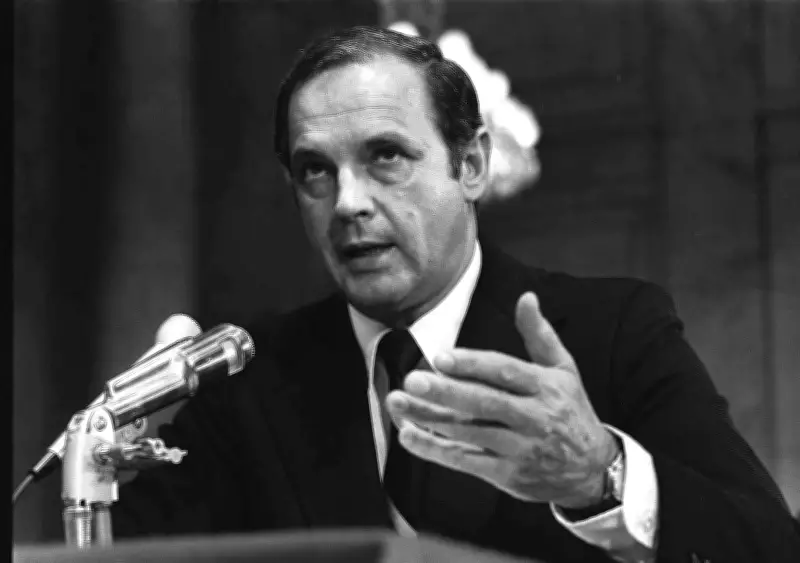
Alexander Butterfield, Key Figure in Watergate Scandal, Passes Away at 99
Alexander Butterfield, the former White House aide whose pivotal testimony in 1973 exposed President Richard Nixon's secret recording system, has died at the age of 99. His revelation of the Oval Office and Cabinet Room tapes dramatically accelerated the Watergate investigation, ultimately leading to Nixon's historic resignation in 1974.
The Fateful Testimony That Changed American Politics
On July 16, 1973, Butterfield appeared before the Senate Watergate Committee and disclosed that President Nixon had been routinely recording conversations in the White House. This bombshell testimony provided investigators with crucial evidence that would become central to the impeachment proceedings against the president.
Butterfield's admission came during questioning about White House operations, when he revealed the existence of a sophisticated taping system that Nixon had installed early in his presidency. The recordings would later provide the "smoking gun" evidence that confirmed Nixon's involvement in the Watergate cover-up.

An Unintentional Catalyst for Constitutional Crisis
Butterfield maintained throughout his life that he had not intended to trigger a constitutional crisis when he testified about the recording system. "I was simply answering questions truthfully," he would later explain in interviews. His straightforward response to Senate investigators nevertheless set in motion one of the most significant political reckonings in American history.
The former Air Force officer served as deputy assistant to President Nixon from 1969 to 1973, overseeing the president's daily schedule and White House operations. His position gave him unique insight into the administration's inner workings, though he consistently maintained he was unaware of the Watergate break-in or subsequent cover-up until they became public knowledge.
Legacy of a Reluctant Whistleblower
Butterfield's testimony created immediate pressure for the White House to release the tapes, leading to a protracted legal battle that reached the Supreme Court. The eventual release of the recordings, particularly the June 23, 1972, conversation showing Nixon attempting to obstruct the FBI's investigation, proved devastating to his presidency.
Following his White House service, Butterfield held several government positions, including administrator of the Federal Aviation Administration and U.S. ambassador to Sweden. Despite his central role in one of America's most significant political scandals, he maintained a relatively low public profile in subsequent decades.
Historians credit Butterfield's testimony with fundamentally altering the course of the Watergate investigation, transforming it from a political controversy into a constitutional crisis that tested the limits of executive power. His passing marks the departure of one of the last living key figures from the Watergate era, a period that continues to shape American political discourse and presidential accountability.