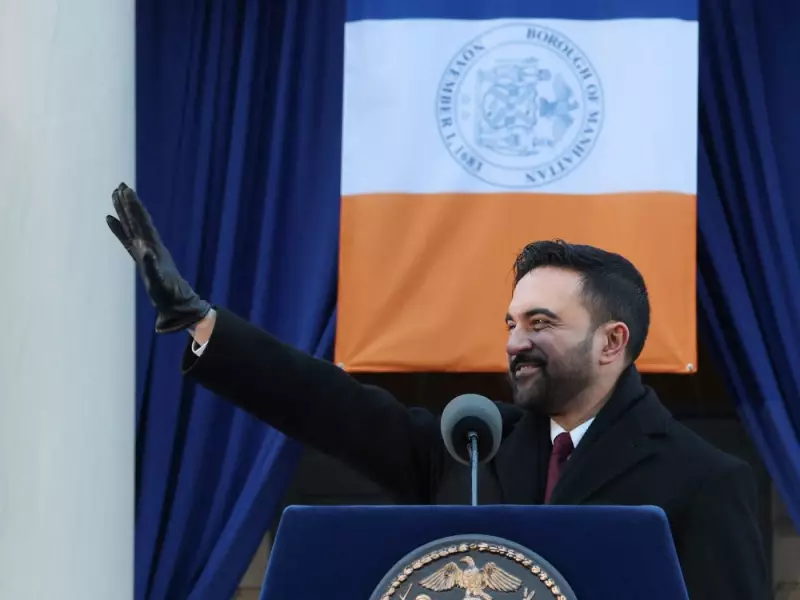
Within his first day in office, New York's new Mayor, Zohran Mamdani, has ignited a political firestorm with actions that have profoundly alarmed segments of the city's Jewish community. The 34-year-old Democratic Socialist, inaugurated on Thursday, moved rapidly to dismantle policies of his predecessor, Eric Adams, that were supportive of Israel, framing his early moves as a necessary fresh start for the city.
Swift Reversal of Key Policies
Mayor Mamdani's initial actions focused on two significant executive orders enacted by former Mayor Eric Adams. The first order he revoked barred New York City municipal agencies from participating in boycotts or divestment campaigns targeting Israel. This tactic, known as the BDS (Boycott, Divestment, Sanctions) movement, is one Mamdani has publicly supported since his university days, viewing it as a tool to challenge Zionism.
The second revoked policy was the city's adoption of the International Holocaust Remembrance Alliance's (IHRA) working definition of antisemitism. This definition is controversial because it includes certain examples of anti-Zionism and criticism of Israel as potential forms of antisemitism. Mamdani, a long-time critic of Israel's status as a Jewish state, has opposed this definition.

Strategic Framing and Immediate Backlash
Rather than targeting the pro-Israel policies alone, Mayor Mamdani strategically ordered a rollback of all executive orders issued by Adams since September 2024, when the former mayor was indicted on federal corruption charges. Mamdani's office presented this as a clean slate for the new administration. However, critics argue this provided political cover for specifically targeting the Israel-related measures.
The reaction from officials and Jewish organizations was immediate and severe. Israel's Foreign Ministry accused Mamdani of pouring "antisemitic gasoline on an open fire." Former Mayor Eric Adams stated that Mamdani's promised "new era" was neither new nor unifying. New York City Councilor Inna Vernikov warned on social media that the mayor's actions were emboldening "pro-Hamas antisemites."
A Calculated Compromise and Long-Term Goal
In a move seen as a calculated compromise, Mayor Mamdani did not dismantle the Office to Combat Antisemitism, which was established by Adams in May. Analysts suggest this allows the new mayor to claim a commitment to Jewish safety while severing the direct link between combating antisemitism and supporting Israel.
The overarching goal appears to be a deliberate decoupling of Israel from Judaism in official city policy, and similarly, separating antisemitism from anti-Zionism. An Office of Antisemitism operating under an administration that rejects the IHRA definition effectively advances this separation, a cornerstone of Mamdani's political ideology.
Adding to the controversy was Mamdani's appointment of Ramzi Kassem, a law professor known for his work representing detainees and critiques of U.S. policy, as his chief counsel the day before taking office. For many concerned New York Jews, these initial steps confirm their pre-election fears about the direction of the new administration.