Prime Minister Mark Carney is betting big on the idea that large injections of public capital can kick-start investment in the Canadian economy, but a series of parliamentary budget officer (PBO) reports assessing last week’s spring economic update highlight how big a gamble this is and how little information we have to assess the government’s progress.
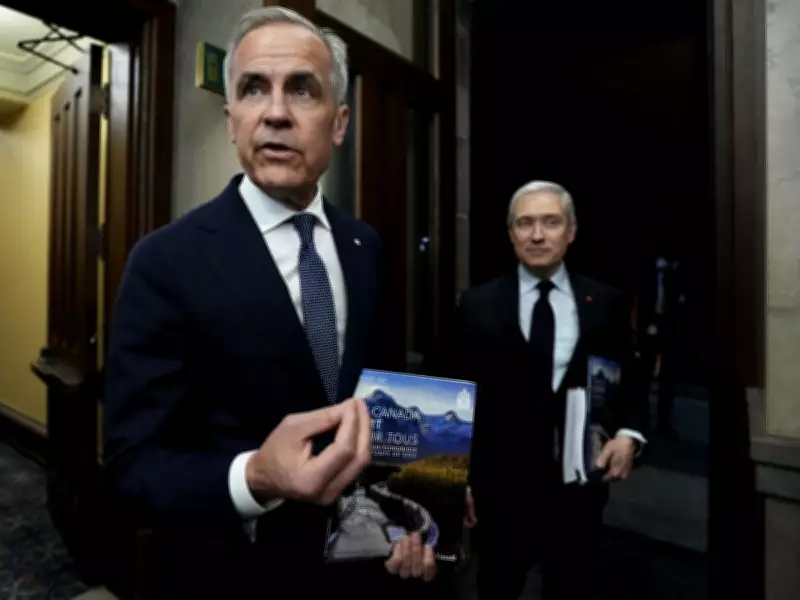
Reading the PBO reports, which were released on Monday, reaffirmed my suspicion that budgets, and their associated fiscal updates, have become little more than glossy advertising brochures for government policy, with little actual substance.
The spring economic update (SEU) is 167 pages long, but unlike my household budget, which tells me exactly how much my family spent on groceries last year, it doesn’t offer a detailed breakdown of how much it costs to run each department. It says that, “In 2025-26, we spent more than $63 billion on our defence,” but exactly how much more is not disclosed.

This lack of detail seems to be generally accepted by budget-watchers, even as the Liberals used the mini-budget to tout how “transparency is critical to lift the fog of uncertainty, help businesses seize new opportunities and give families the confidence to plan for their future.”
Yet the opaqueness of the budget can have a significant impact on long-term projections. As the PBO noted, the government’s deficit projections over the next five years have been revised downward, but it is “unclear that the full cost of Canada’s NATO five per cent GDP commitment … is reflected in these figures.”
The watchdog estimates that meeting our NATO commitment will require a defence budget of $159 billion a decade from now, adding $63 billion to the deficit in the 2035-36 fiscal year — almost as much as this year’s total deficit, which is one of the highest on record.
Perhaps that’s a cost the government will be able to afford if it can cut spending in some areas and grow its tax base by turbocharging the economy through new capital investments, but, while it’s still early days, we don’t know if Ottawa is meeting its benchmarks, or even what they are in many cases.
The Liberals pledged to cut the budgets of a host of federal agencies by 7.5 per cent this year, saving taxpayers $8.5 billion, and up to 15 per cent over three years. But the spring economic update only says that the budget cuts are “well underway.” It does not “provide details on actual savings in 2026-27,” or any updates on staff reductions, meaning that the PBO will have to do its own digging through supplementary estimates, departmental reports and staffing levels to figure out what’s going on.
On infrastructure, too, Parliamentary Budget Officer Annette Ryan lamented the fact that the spring economic update “provided directional, rather than detailed, updates on key strategic capital priorities introduced in budget 2025 — namely infrastructure and major projects; productivity and competitiveness; housing; and defence and security.”
This government's lack of transparency does not inspire a lot of confidence. The PBO reports highlight the risks of Carney's approach, where large public investments are made without clear benchmarks or accountability. Canadians deserve to know how their money is being spent and whether these gambles will pay off.