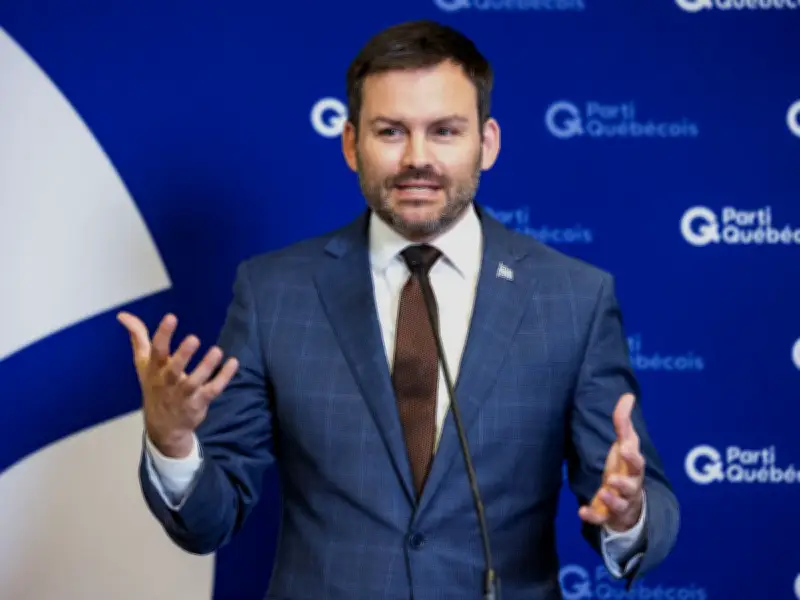
In a recent speech in Montreal, Parti Québécois Leader Paul St-Pierre Plamondon insisted that independence would elevate Quebec onto the world stage — including, he argued, a place at NATO’s table. His claim rests on a seductive but flawed assumption: that merely having a seat in an international alliance translates into meaningful geopolitical influence. It does not.
Nevertheless, Quebec separatists want their supporters to believe that Quebec’s global standing will be enhanced if it were to become an independent state. Plamondon even invoked Prime Minister Mark Carney’s observation that, “If you’re not at the table, you’re on the menu” — suggesting that sovereignty would finally allow Quebec to sit among the great powers shaping international decisions, rather than having those decisions made for it.
It’s a clever line, but it obscures a deeper geopolitical truth: not all those seated at the table matter equally. Plamondon argues that Quebec’s strategic geography — including its proximity to New York state — would make it a valuable NATO partner. But this confuses geography with leverage, and membership with influence.

The Hard Road to NATO Membership
Even before considering what Quebec’s actual weight inside NATO would be, there is the inconvenient reality that Quebec would not automatically become a member. An independent Quebec would first have to apply for accession, which requires unanimous approval from all existing NATO members. Any country, including Canada, could delay or block the process while post-separation negotiations over borders, debt sharing, defence assets, Arctic responsibilities and relations with Canada unfold.
And NATO membership is not symbolic. Quebec would have to build an army, intelligence systems, procurement structures and command capabilities largely from scratch, while simultaneously managing the economic and political upheaval accompanying secession. But even assuming Quebec overcame every obstacle and secured NATO membership, what influence would it actually possess?
Size Matters in Geopolitics
In NATO, as in most international organizations, size matters. Military capacity matters. Economic weight matters. Strategic reach matters. The United States shapes the alliance. Germany, Britain, France, along with Poland and Turkey, exercise significant influence. Smaller members participate, contribute and occasionally matter on specific issues — but they do not drive outcomes.
Influence in geopolitics is not simply about possessing a chair and a flag. It is about the scale of the political, economic, military and diplomatic power behind that chair. Canada, for all its limitations, exercises far more influence collectively than Quebec would alone. In fact, the influence Quebec possesses globally is primarily because it is part of Canada — a fact that sovereigntists consistently understate.
The Parti Québécois's dream of Quebec becoming a NATO member state is nothing but a fantasy. Even if an independent Quebec were able to join the alliance, its voice would not count for much.