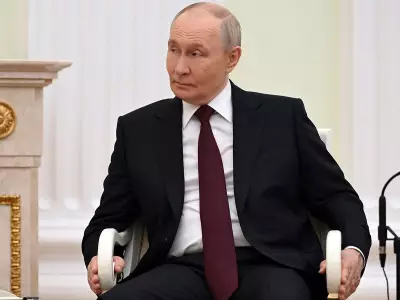
U.S. President Donald Trump's year-end push to broker an end to the war in Ukraine has hit a significant new obstacle. Russian President Vladimir Putin has accused Ukraine of launching a drone attack on his personal residence, a claim Kyiv vehemently denies as a fabrication.
A Diplomatic Setback After Florida Optimism
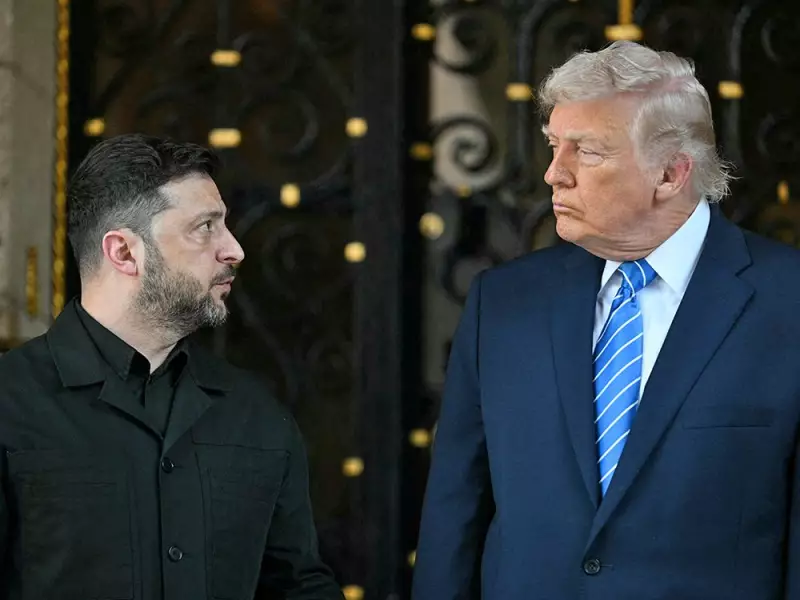
The allegation and its fallout mark a sharp reversal from the optimism displayed just one day earlier. On Sunday, December 28, 2025, President Trump hosted Ukrainian leader Volodymyr Zelenskyy at his Mar-a-Lago estate in Palm Beach, Florida. Following that meeting, Trump hailed "a lot of progress" toward a peace deal, though he cautioned a conclusion might take weeks.
That diplomatic momentum stalled on Monday when Putin informed Trump of the alleged attack during their second phone call in two days. According to the Kremlin, Putin stated that Moscow would now revise its negotiating position and reconsider a number of previously reached agreements related to the conflict.

Conflicting Narratives and Accusations
The Russian government provided specific details through Foreign Minister Sergei Lavrov. He claimed Ukraine attempted to attack a presidential residence in the Novgorod region, over 400 kilometres northwest of Moscow, using 91 drones. Lavrov vowed retaliation, stating targets had already been selected.
Ukrainian officials immediately rejected the story. President Zelenskyy dismissed the Russian claims as a "new lie," suggesting Moscow could be creating a pretext to prepare an attack on government buildings in Kyiv. Foreign Minister Andrii Sybiha similarly cast it as a false flag operation intended to justify continuing the war.
Trump's Reaction and the Path Forward
Speaking to reporters in Florida, President Trump confirmed Putin told him about the purported attack. Seeming to align with the Russian leader's grievance, Trump expressed anger. "It's one thing to be offensive, because they're offensive," Trump said. "It's another thing to attack his house. It's not the right time to do any of that."
Despite the tension, Kremlin aide Yuri Ushakov indicated Putin assured Trump that Moscow intended to continue working with U.S. partners on peace efforts, and both leaders agreed to maintain dialogue. White House Press Secretary Karoline Leavitt described the Trump-Putin call as "positive" in a post on X.
Uncertain Future for Peace Efforts
This incident introduces fresh uncertainty into international efforts to resolve the conflict that began with Russia's full-scale invasion in 2022. President Trump had pledged to end the war on his first day back in office, making the recent flurry of diplomacy with both Zelenskyy and Putin a key test.
The conflicting narratives—with Moscow citing a direct attack on its leader's home and Kyiv calling it a disinformation tactic—create a formidable new barrier. Whether this accusation represents a genuine escalation or a tactical negotiating ploy, it has undoubtedly complicated the already fragile peace process at a critical diplomatic moment.