Quebec's Political Landscape Braces for Potential Double Election Year
Former NDP leader Tom Mulcair suggests Quebecers could be facing two significant elections this year, creating a complex political scenario with multiple variables at play. The provincial political scene remains volatile while federal considerations add another layer of uncertainty to Quebec's democratic process.
Charles Milliard's Leadership Launch Revitalizes Quebec Liberals
Charles Milliard's recent leadership launch has injected new energy into the Quebec Liberal Party, demonstrating that the organization still possesses political reflexes and management capabilities. Milliard's strategic positioning includes strong support for a new bridge or tunnel in Quebec City, leveraging his personal connection to the Lévis region across from the provincial capital.
The greater Quebec City area represents more than a dozen crucial seats that previously propelled François Legault to power and sustained his second term. However, Legault's broken promise on infrastructure created significant backlash, enabling the Parti Québécois to achieve an improbable byelection victory in a traditionally federalist riding.

Legault's Government Faces Mounting Challenges
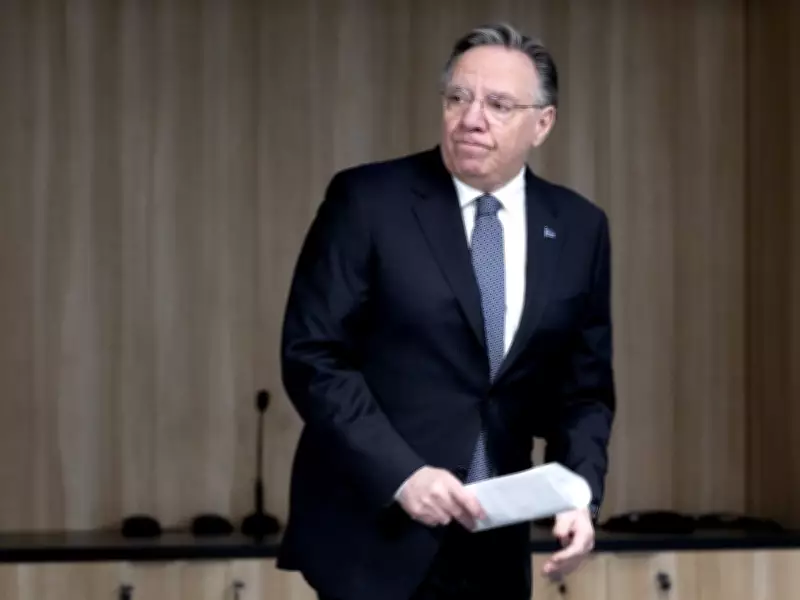
The Coalition Avenir Québec government continues to struggle, with the recent Gallant Commission report on the SAAQclic scandal delivering a brutal assessment of administrative failures. Legault's attempts to deflect responsibility through threats of legal action against alleged liars have proven unconvincing to political observers.
Mulcair emphasizes that ministerial responsibility remains the fundamental principle of parliamentary democracy, noting that Legault, as premier, ultimately bears responsibility for his government's shortcomings. This represents a particularly humiliating development for a leader who once proudly described his administration as a "government of accountants."
Leadership Transitions and Strategic Positioning
Indications suggest Christine Fréchette may soon replace Legault as CAQ leader, with polling showing her decisively outperforming rival Bernard Drainville. Fréchette brings exceptional administrative and communication skills to the table, though she faces the challenge of distancing herself from eight years of CAQ governance.
The central question for voters may become: "Which candidate stands the best chance of defeating the Parti Québécois?" Current polling indicates approximately two-thirds of Quebecers oppose sovereignty referendums, creating a strategic environment where federalist positioning becomes crucial.
Conservative Party Emerges as Potential Wild Card
Éric Duhaime's Quebec Conservative Party represents a significant variable in the provincial equation. While polling around 15 percent support might not translate into seats under Quebec's electoral system, this substantial vote share grants the party considerable influence in potential coalition negotiations.
Duhaime could potentially secure a senior ministerial portfolio by forming an alliance with either Milliard's Liberals or Fréchette's CAQ, raising questions about whether political leaders will prioritize federalist unity over partisan interests.
Federal Election Considerations Add Complexity
The political calculus extends beyond provincial boundaries, with Prime Minister Mark Carney's federal government facing its own electoral considerations. The recent Supreme Court decision annulling last year's Liberal victory in Terrebonne riding creates additional pressure, as the Liberals face challenges holding this constituency.
Carney maintains popularity in Quebec and could perform well in an early election, but a potential byelection loss in Terrebonne might signal broader Liberal vulnerability in the province. This could significantly influence the timing of any federal election call against Conservative Leader Pierre Poilievre, whose personal unpopularity presents both opportunity and risk.
The convergence of provincial leadership transitions, strategic federalist positioning, and potential federal electoral timing creates a uniquely complex political year for Quebec, with voters potentially facing multiple ballots that will shape the province's direction for years to come.