Fiery Senate Hearing Erupts Over Affordable Care Act Debate
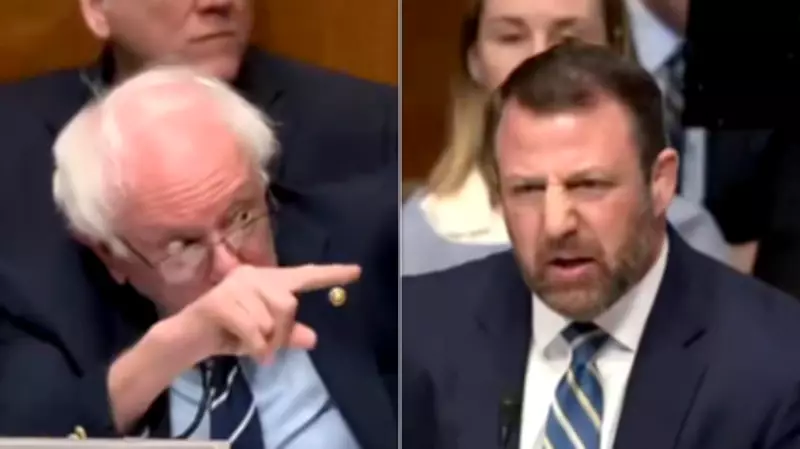
In a dramatic Senate hearing on Wednesday, Senators Bernie Sanders (I-Vt.) and Markwayne Mullin (R-Okla.) engaged in a heated confrontation regarding the Affordable Care Act's effectiveness and affordability. The exchange occurred during proceedings for President Trump's surgeon general nominee, Casey Means, and quickly escalated beyond policy discussions into personal territory.
Clashing Perspectives on Health Care Affordability
Senator Mullin initiated the contentious dialogue by acknowledging that both he and Senator Sanders, who chairs the Health, Education, Labor and Pensions Committee, agree that health care has become unaffordable for many Americans. However, the Oklahoma Republican sharply criticized his Vermont colleague for supporting what he described as the very mechanisms that created the current crisis.
"The problem is you supported the same tools that got us to where health care is unaffordable," Mullin asserted. "ACA affordable health care, which is completely unaffordable, has risen three times faster than inflation itself — yet, we still support it. Not 'we,' you."

Senator Sanders countered by advocating for a national health care program that could substantially reduce costs, but Mullin interrupted, claiming it was his turn to speak. This prompted Sanders to exclaim, "But you're attacking me," highlighting the personal nature of the exchange.
Escalating Tensions and Personal Accusations
The Oklahoma senator continued with what he later admitted was a lengthy rant, placing full responsibility for the health care system's failures on Sanders. Mullin criticized his colleague for refusing to acknowledge that the Affordable Care Act "doesn't work" and for chastising lawmakers attempting to implement changes.
"God forbid we change and go after and try to fix our broken system," Mullin declared before conceding he had "ranted too long." Sanders quickly jabbed, "Yes, you did," which triggered another extended response from the Oklahoma Republican.
Mullin's retort became increasingly personal: "I'm sorry, I didn't ask your opinion on that. And if I cared about your opinion, I would ask you, but I don't care about your opinion." He accused Sanders of being "part of the system" and "part of the problem," then referenced their age difference with a pointed remark.
"You've been sitting here longer than I've even been alive," Mullin continued. "This is your problem. You should have fixed this a long time ago ... What have you been doing?"
Sanders responded with sarcasm: "I decided not to run for surgeon general." He then gestured toward nominee Casey Means and added, "You're the nominee. I've decided not to accept that nominee." Mullin dismissed this comment, stating, "That is definitely something we would never accept."
Historical Context of the Rivalry
This confrontation represents the latest chapter in an ongoing political rivalry between the two senators. Late last year, they clashed on the Senate floor after Sanders blocked a bipartisan children's cancer research bill. The former presidential candidate sought to amend the legislation to include funding for community health centers.
Mullin, who had introduced the bill, made a dramatic accusation at that time, claiming Sanders was "literally killing kids in front of us because of his political movement." This history of conflict added significant tension to Wednesday's hearing, transforming what might have been a routine policy discussion into a deeply personal and emotionally charged exchange.
The hearing ultimately showcased not only fundamental disagreements about health care policy but also highlighted the increasingly polarized nature of congressional discourse, where substantive policy debates frequently give way to personal attacks and historical grievances between lawmakers from opposing political perspectives.