Months after inviting higher-density development along a major South Windsor artery, city council backed plans for a three-storey apartment building this week, warning resistant residents that more neighbourhood change would come.
“It could be something that’s actually more intrusive than this,” Mayor Drew Dilkens told members of the public during Monday’s council meeting. “It could be something worse, when you start getting into types of developments on land this size.”
In an 8-3 vote — and after nearly three hours of discussion — council agreed to permit a three-storey, 29-unit apartment building on land currently occupied by two single-family homes at 1141 and 1175 Cabana Rd.

Six area residents spoke against the proposal, raising concerns about garbage, traffic, neighbourhood incompatibility, and the “transient” student population that may move in.
“This has been an established neighbourhood,” said Fulvio Valentinis, a former city councillor who lives in South Windsor. “There has to be some recognition of that. This is not vacant land. It’s not transient land.”
Dilkens and seven councillors agreed with a recommendation from the city’s planning department to let the development go ahead.
“When you start adding ADUs (additional dwelling units) as of right, it could be a development that you hate more,” Dilkens told residents. “I want to support you, but, at the same time, we have set the table for this type of development.”
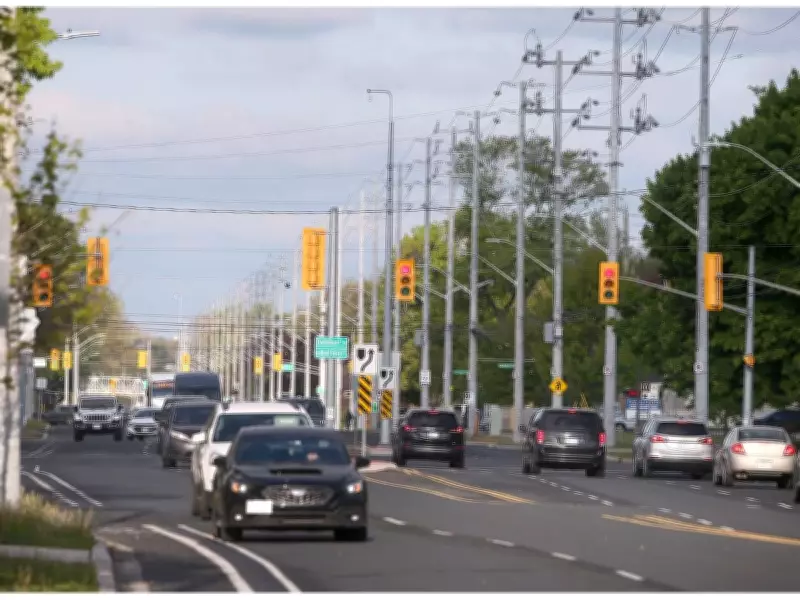
City council encouraged higher-density development along Cabana and other major transit thoroughfares when it amended Windsor’s official plan to designate new residential corridors last September. The change aimed to introduce townhomes, stacked dwellings, and low- to mid-rise apartments along Cabana Road West, Lauzon Road, and Wyandotte Street East, but not without public hearings and council debates around zoning requests, like the one held at city hall on Monday.
Ward 1 Coun. Fred Francis, who represents the South Windsor neighbourhood, unsuccessfully asked his council colleagues to deny the zoning bylaw amendment, arguing the project could negatively impact the single-family-home neighbourhood. He had support from Ward 7 Coun. Angelo Marignani and Ward 8 Coun. Gary Kaschak.
“If (residents) tell me they think it’s a negative change to their neighbourhood, where they made the largest investment in their lifetime, in their home, then I can’t look the other way on that,” Francis said. “I acknowledge there’s a policy. I acknowledge we’re following that policy, and we’re doing (so on a) case-by-case basis. But we have to factor in what the residents are saying.”
Voting in favour of the three-storey apartment were councillors Frazier Fathers (Ward 2), Renaldo Agostino (Ward 3), Mark McKenzie (Ward 4), Ed Sleiman (Ward 5), Jo-Anne Gignac (Ward 6), Kieran McKenzie (Ward 9), and Jim Morrison (Ward 10).
Gignac said the Riverside neighbourhood she represents has experienced a “huge change” in density since she was first elected in 2003. Condominiums and towers now stand on lots where “individual, beautiful, large homes” once dominated.
This development represents a significant shift in South Windsor's landscape, as the city pushes for more housing options along transit corridors. The debate highlights the tension between municipal policy goals for density and residents' desire to preserve neighbourhood character.