In a significant diplomatic development, Spain has firmly refused to permit its jointly operated U.S. military bases to be utilized for attacks against Iran. This stance comes as flight tracking data reveals the movement of numerous U.S. aircraft from Spanish bases following weekend strikes by the United States and Israel on Iranian targets.
Flight Tracking Reveals Aircraft Movements
According to detailed maps from the flight monitoring website FlightRadar24, a total of fifteen U.S. aircraft departed from the Rota and Moron military bases in southern Spain on Monday. These bases, while operated collaboratively by the U.S. and Spain, remain under Spanish sovereignty. The tracking data indicated that at least seven of these aircraft subsequently landed at Ramstein Air Base in Germany.
Spanish Government's Firm Position
Foreign Minister Jose Manuel Albares explicitly stated that Spain would not allow its military installations to be involved in offensive operations against Iran, which the Spanish government has condemned. "Spanish bases are not being used for this operation, and they will not be used for anything not included in the agreement with the United States or for anything that is not in accordance with the Charter of the United Nations," Albares declared in an interview with Spanish broadcaster Telecinco.

Defence Minister Margarita Robles clarified that the aircraft in question were primarily aerial refuelling tankers, including the Boeing KC-135 "Stratotanker," which have been permanently stationed in Spain. FlightRadar24's tracking showed nine tankers departed from the Moron airbase on Sunday, heading towards Germany. Additionally, two flights left from the Rota naval base, which includes an airfield, bound for southern France, while four other flights from Rota had their routes undisclosed.
Broader Diplomatic Implications
Spain's position, coupled with the strong condemnation of the U.S.-Israeli actions by Socialist Prime Minister Pedro Sanchez, positions the country as an outlier in the region. This move is likely to further strain Spain's relationship with Washington, adding tension to an already complex alliance. The situation mirrors initial resistance from Britain, which had also refused to allow the use of its bases for an attack on Iran before Prime Minister Keir Starmer authorized their use for "collective self-defence" on Sunday.
Historical Context and Future Outlook
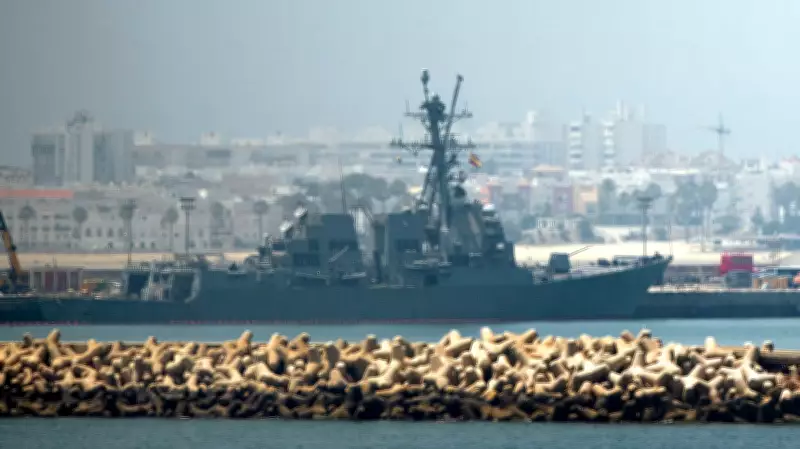
The U.S.-Spanish naval base in Rota, Spain, has been a strategic location for military operations, as evidenced by a warship docked there in 2025. However, Spain's current refusal underscores a commitment to international law and its sovereign control over these facilities. As geopolitical tensions escalate, this decision highlights the delicate balance between alliance obligations and national principles, potentially setting a precedent for other NATO members.
Observers note that Spain's stance could influence future military collaborations and diplomatic negotiations, emphasizing the importance of clear agreements and adherence to the United Nations Charter in international conflicts.