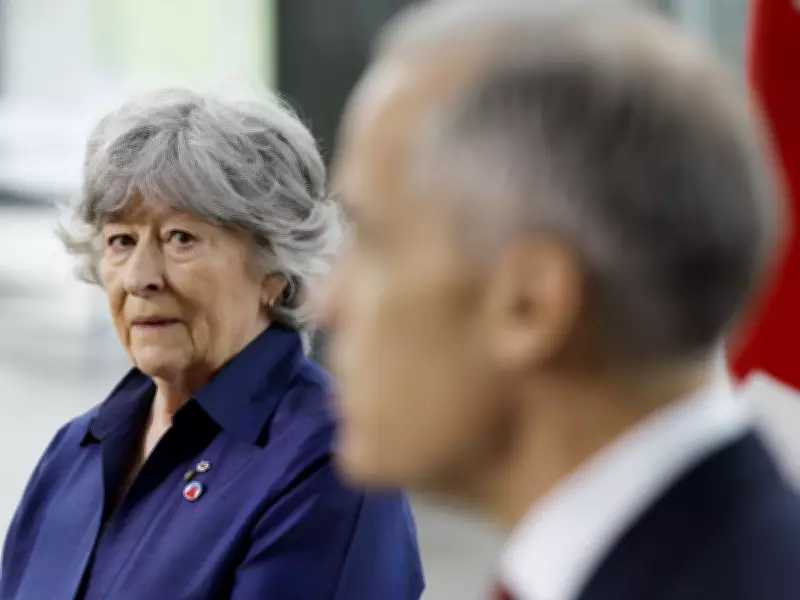
Prime Minister Mark Carney has named Louise Arbour as Canada's 31st Governor General. Arbour, 79, is a former Supreme Court justice, former UN High Commissioner for Human Rights, and former chief prosecutor of international war crimes tribunals. Bilingual and from Montreal, her credentials are beyond dispute, but her appointment is seen as one of the most ideologically driven choices for Rideau Hall in recent memory.
The Prime Minister's Office has not confirmed whether any advisory committee was consulted. CBC inquired, but the PMO did not respond. This is significant because Stephen Harper established a formal, non-partisan Advisory Committee on Vice-Regal Appointments in 2012, creating the first institutional check on what had previously been raw prime ministerial patronage. Justin Trudeau abolished that committee, selected Julie Payette based on personal appeal, and saw her resign in disgrace after a workplace abuse scandal. Trudeau later reinstated an advisory panel for Mary Simon. Carney, however, appears to have reverted to the original Trudeau method: selecting someone from the elite and announcing the decision.
A Return to Patronage
The lack of transparency in this appointment has drawn criticism. The advisory committee was designed to ensure a non-partisan selection process, but Carney's move suggests a return to the old ways. This raises concerns about accountability and the concentration of power within a small circle of influential figures.

Regional Representation Issues
Nine of Canada's fourteen Canadian-born governors general have come from Quebec or Ontario. The last Western Canadian to hold the role was Ray Hnatyshyn, who left office in 1995. The last Albertan was Roland Michener, who departed in 1974, more than half a century ago. British Columbia has never produced a governor general, nor have Nova Scotia, Prince Edward Island, Newfoundland, or any of the three territories.
The ideal GG candidate is bilingual, which narrows the pool to central Canada, and typically holds credentials in law, diplomacy, or the CBC. They are often Companions of the Order of Canada and subscribe to what John Ibbitson identified as the Laurentian consensus: the belief that Canada is fragile, the federal government must bind it together, Quebec must be appeased, poorer regions require subsidies, and Canada should act as a helpful mediator on the world stage.
Arbour fits this profile perfectly. Former Prime Minister Jean Chretien appointed her to the Supreme Court. Former UN Secretary General Kofi Annan named her UN High Commissioner for Human Rights. The Trudeau government commissioned her to review sexual misconduct in the Canadian Armed Forces. She has been on the GG shortlist for years because she epitomizes the type of person who ends up on such lists—a permanent fixture of the Canadian establishment's rotating cast of appointable notables.
Ibbitson wrote in The Hub just last week that Carney's election represented the Laurentian elite being 'determined in this time of crisis to put one of their own into the prime minister's office.' Now Carney is placing another elite figure into Rideau Hall.