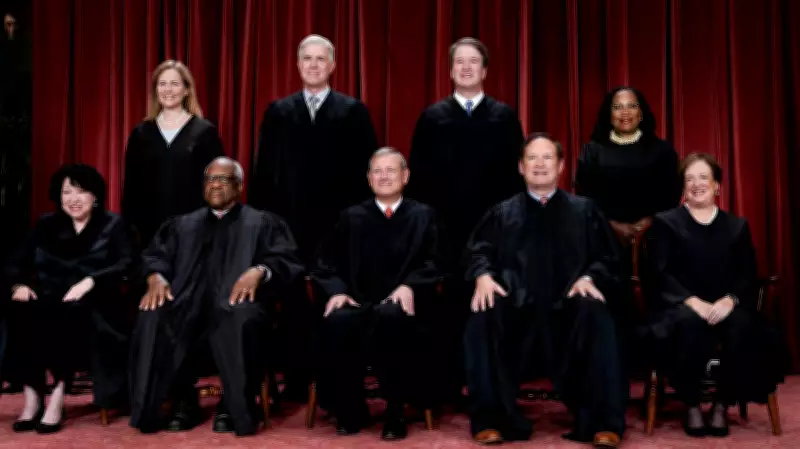
The Supreme Court on Wednesday heard arguments in two cases challenging the Trump administration's authority to terminate temporary protected status (TPS) for immigrants from Haiti and Syria. The cases, Mullin v. Dahlia Doe and Trump v. Fritz Emmanuel Lesly Miot, center on whether former Department of Homeland Security Secretary Kristi Noem followed legal consultation requirements in ending the protections.
Justices Divided on Judicial Review
During oral arguments, the justices appeared split along ideological lines. Solicitor General John Sauer argued that Noem's decisions are not subject to judicial review, but liberal justices expressed skepticism. Justice Elena Kagan noted that while the judicial review bar is broad, it still has meaning. Conservative justices, including Samuel Alito, focused on the technicalities of the law, warning that allowing challenges to the consultation process could create a slippery slope undermining oversight.
Background on TPS
TPS is granted to individuals from countries experiencing violence, war, or other extraordinary conditions, allowing them to live and work in the U.S. temporarily. Currently, 17 countries have TPS status, but Noem removed protections for 13 of them. The Supreme Court previously agreed to strip TPS from over 300,000 Venezuelans. Both Haiti and Syria remain dangerous, with the State Department issuing Level 4 travel advisories for both nations due to terrorism, civil unrest, and armed conflict.

Legal Requirements and Allegations
Under federal law, DHS must consult with other agencies before ending TPS. District courts have blocked attempts to terminate TPS for Syria and Haiti, finding likely violations of the Administrative Procedure Act. Ahilan Arulanantham, representing TPS holders, argued that Noem failed to follow statutory steps, including meaningful consultation. He also cited Noem's public comments referring to immigrants as killers and leeches, suggesting racial animus influenced her decisions.
Government's Position
Sauer contended that Noem had broad discretion, even claiming she could decide there were no appropriate agencies to consult without judicial review. Justice Ketanji Brown Jackson challenged this with a hypothetical: if Noem used a Ouija board or drew names from a hat to make decisions, would that be unreviewable? Sauer maintained that such actions would still not be subject to court review.
Potential Impact
A ruling for the administration could affect approximately 1.5 million TPS holders. The decision is expected by June, but the court may take months. Meghan Haputman, an attorney for the International Refugee Assistance Project, warned that a ruling against judicial review would allow the administration to bypass laws, potentially leading to further attacks on TPS.
This is a developing story.