Conservative Defections Pave Way for Liberal Majority Government
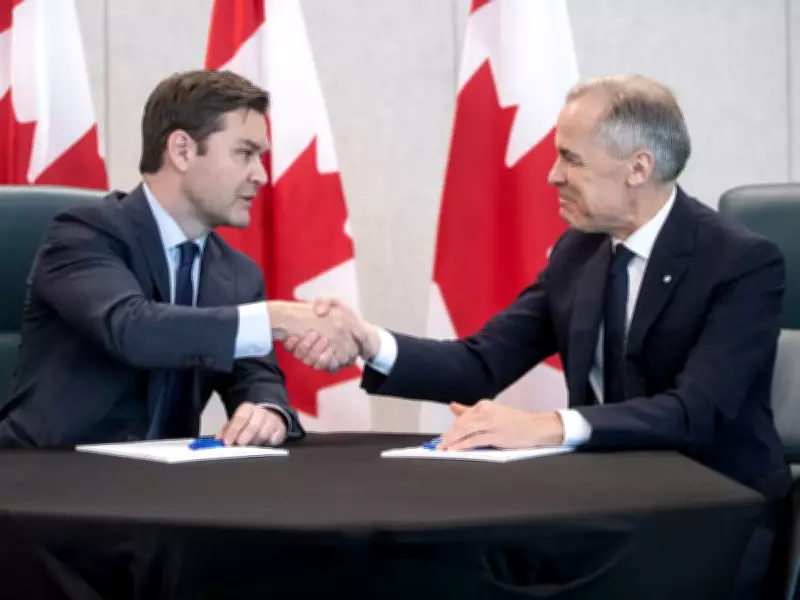
Prime Minister Mark Carney is poised to secure a majority government following three critical byelections scheduled for next Monday, but this political shift would not have been possible without the dramatic floor-crossing of three Conservative MPs to the Liberal Party. This unprecedented move in Canadian parliamentary history has fundamentally altered the balance of power in Ottawa.
The Three Turncoat Tories
Former Conservative MPs Chris d'Entremont, Michael Ma, and Matt Jeneroux have emerged as the unlikely architects of what appears to be a forthcoming Liberal majority government. Their decision to abandon the official Opposition party has created a political earthquake that could reshape Canadian governance for years to come.
While former NDP MP Lori Idlout also crossed the floor to join the Liberals, her defection alone would not have been sufficient to deliver a parliamentary majority. The simultaneous departure of three Conservative representatives from Pierre Poilievre's caucus represents a remarkable political realignment.

Historical Precedent and Political Fallout
Canada has witnessed more than 300 floor-crossings since Confederation in 1867, but the current situation stands as unique in parliamentary annals. Never before have three MPs from the official Opposition defected simultaneously to transform a minority government into a majority administration following a federal election.
Conservative Leader Pierre Poilievre has leveled serious accusations against Carney, alleging that the Prime Minister engaged in "dirty backroom deals" to orchestrate this political coup. However, political analysts note that such arrangements would have been impossible without the willing participation of the three Conservative MPs who chose to abandon the party under whose banner they were originally elected.
Byelection Dynamics and Parliamentary Mathematics
The Liberals are widely expected to secure victories in two crucial byelections next Monday:
- University–Rosedale (formerly represented by Chrystia Freeland), where Liberals captured 64% of the popular vote in the 2025 election
- Scarborough Southwest (formerly represented by Bill Blair), where Liberals secured 61.49% of the popular vote in the 2025 election
These anticipated victories would grant the Liberals 172 seats in the 343-seat House of Commons—exactly one seat more than the combined opposition total of 171 seats. While Liberal Speaker Francis Scarpaleggia typically refrains from voting, he would be compelled to cast a deciding ballot in the event of a 171-171 tie.
The Terrebonne Wild Card
A third byelection in the Montreal-area riding of Terrebonne presents additional opportunities for Liberal expansion. The party originally won this constituency by a single vote in the 2025 election with 38.74% of the popular vote, but that victory was subsequently overturned by the Supreme Court of Canada due to a procedural irregularity involving a misprinted mail-in ballot return envelope.
Should the Liberals prevail in Terrebonne as well, their parliamentary strength would increase to 173 seats, eliminating any dependence on the Speaker's tie-breaking vote and providing greater legislative stability.
Long-Term Political Implications
If these political projections materialize as expected, the Liberal Party will likely maintain control of the federal government until 2029, barring any early election calls. This extended tenure would represent one of the most stable periods of single-party governance in recent Canadian history, fundamentally reshaping the political landscape and opposition strategies for the remainder of the decade.
The floor-crossing phenomenon has sparked intense debate about party loyalty, parliamentary democracy, and the ethical dimensions of political defection in Canada's Westminster system. As the byelections approach, all eyes remain fixed on these three ridings that will determine the nation's political trajectory for years to come.