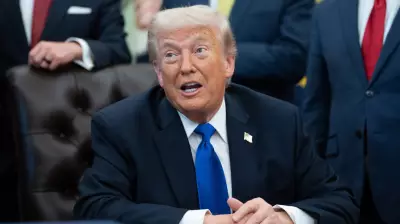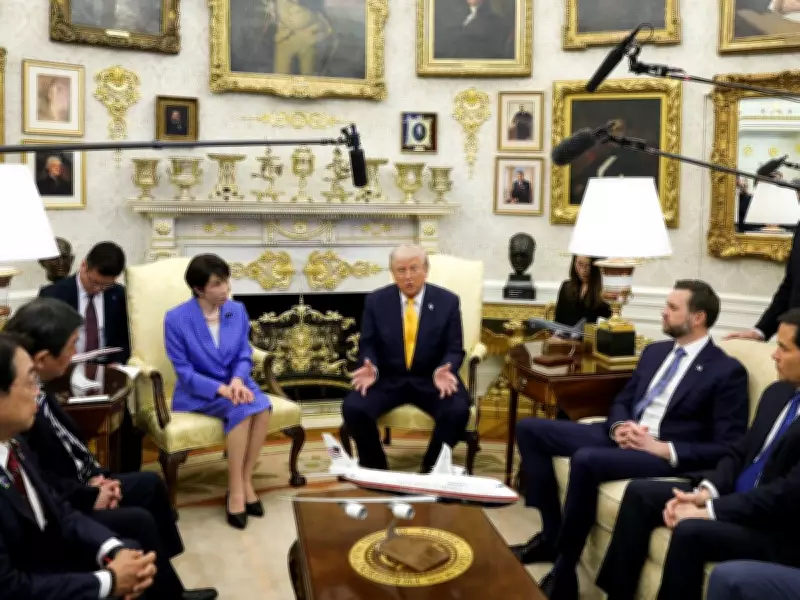
In a striking diplomatic moment that reverberated through international circles, former U.S. President Donald Trump hosted Japanese Prime Minister Sanae Takaichi at the White House on March 19, 2026, where he made a provocative comparison between his surprise military strike on Iran and the infamous Japanese attack on Pearl Harbor during World War II.
A Tense Exchange in the Oval Office
The bilateral meeting, attended by key U.S. officials including Vice President JD Vance, Secretary of State Marco Rubio, and Secretary of War Pete Hegseth, took an unexpected turn when Trump addressed questions about his administration's decision to launch an unannounced attack on Iran without informing allied nations beforehand.
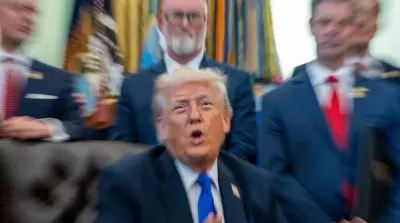
When pressed by a Japanese journalist about why allies weren't notified prior to the strikes, Trump responded with a rhetorical question that immediately shifted the room's atmosphere. "We wanted surprise," he stated. "Who knows better about surprise than Japan?"

Historical References and Diplomatic Discomfort
As Prime Minister Takaichi's eyes widened in apparent astonishment at the comparison, Trump escalated his remarks further, directly addressing the Japanese leader with another pointed question: "Why didn't you tell me about Pearl Harbor?"
The reference to December 7, 1941—when Imperial Japan launched a devastating surprise attack on the U.S. naval base at Pearl Harbor, Hawaii—carried profound historical weight. That event directly precipitated America's entry into World War II and ultimately contributed to Japan's military defeat and the collapse of its imperial government.
Observers noted the visible discomfort in the room as Trump drew this parallel between his contemporary military action and one of the most consequential surprise attacks in modern history.
Context and Implications
The exchange occurred during what was intended to be a routine diplomatic meeting between the leaders of two key allied nations. Japan has maintained a strong security partnership with the United States for decades following World War II, making Trump's invocation of Pearl Harbor particularly jarring in diplomatic terms.
Trump's comments immediately sparked discussion among foreign policy analysts about:
- The appropriateness of historical analogies in diplomatic discourse
- The potential impact on U.S.-Japan relations
- The messaging strategy behind Trump's unannounced Iran strike
- How allies perceive unilateral military actions by the United States
The moment was captured and shared widely on social media, with C-SPAN posting video of the exchange that quickly circulated among political commentators and international observers.
Broader Diplomatic Considerations
This incident highlights the complex dynamics of modern international relations, where historical references can carry significant emotional and political weight. Japan's transformation from wartime adversary to one of America's closest allies in the Asia-Pacific region represents one of the most successful post-conflict relationships in modern history.
Trump's decision to invoke Pearl Harbor in this context—while defending his administration's surprise military action—raises questions about how historical trauma is referenced in contemporary political discourse and what boundaries exist in diplomatic communication between allied nations.
The exchange serves as a reminder that even between close partners, certain historical references remain sensitive and can create unexpected diplomatic friction when invoked in high-stakes political settings.