According to a royal biographer, former U.S. President Donald Trump has significantly tempered his long-discussed ambition to make Canada the 51st state, primarily due to his newfound awareness of the nation's constitutional ties to the British monarchy. The revelation comes from an interview conducted in late 2025, where Trump's reverence for King Charles III and the complexities of Canadian history reportedly led to a pragmatic retreat from the annexation idea.
A Royal Realization Tempers Ambition
Royal expert and author Robert Hardman, who interviewed Trump for his book on Queen Elizabeth II, shared that the topic emerged during a conversation at the Mar-a-Lago resort in Florida. When Hardman advised against U.S. attempts to acquire Greenland, citing risks to NATO, he also urged Trump to stop suggesting the annexation of Canada, a key historical ally of the United Kingdom.
"Attempting to acquire it would undoubtedly make the King of Canada unhappy," Hardman stated, prompting Trump to inquire about Canada's sovereign rule. The former president was seemingly unaware that King Charles III remains Canada's head of state, a fact that appeared to give him pause.

Conceding to Historical Realities
Trump reportedly acknowledged the impracticality of his vision within a single presidential term, referencing Canada's deep-rooted history and national identity. "I suppose the Canadians have got 200 years of history and all that 'O, Canada' thing. You can't deal with that in three-and-a-half years. I guess it's not going to happen," he reflected, according to Hardman's account.
This moment was described by the biographer as the closest he had heard to an admission that, as long as Canada maintained its royal connection, Trump would not seek to usurp the King's role. The former president also repeated his criticism of Canadian politicians, whom he accused of being duplicitous, and reiterated his false claim about the arbitrary nature of the Canada-U.S. border.
Subtle Royal Support for Canada
While Buckingham Palace has declined to comment on Trump's 51st state rhetoric, there have been indications of royal support for Canada amidst these discussions. Last year, following a meeting with then-Prime Minister Justin Trudeau in the U.K., King Charles and Queen Camilla planted a red maple tree at their Sandringham estate, a symbolic gesture of solidarity.
Additionally, the King presented a ceremonial sword to a Canadian Senate official and, during a visit to Canada, delivered a throne speech that concluded with a standing ovation after he affirmed, "The True North is indeed strong and free!" These actions subtly reinforced the monarchy's commitment to Canada during a period of political tension.
Persistent Allusions and Public Imagery
Despite stepping back from direct statements, Trump has continued to allude to the idea of annexation. In a recent Truth Social post about Asian Carp in the Great Lakes, he referred to Prime Minister Mark Carney as the "future Governor of Canada," a jab he has used sparingly. Earlier this year, he shared a doctored image showing Canada, Greenland, and Venezuela covered by the American flag, underscoring his lingering interest in territorial expansion.
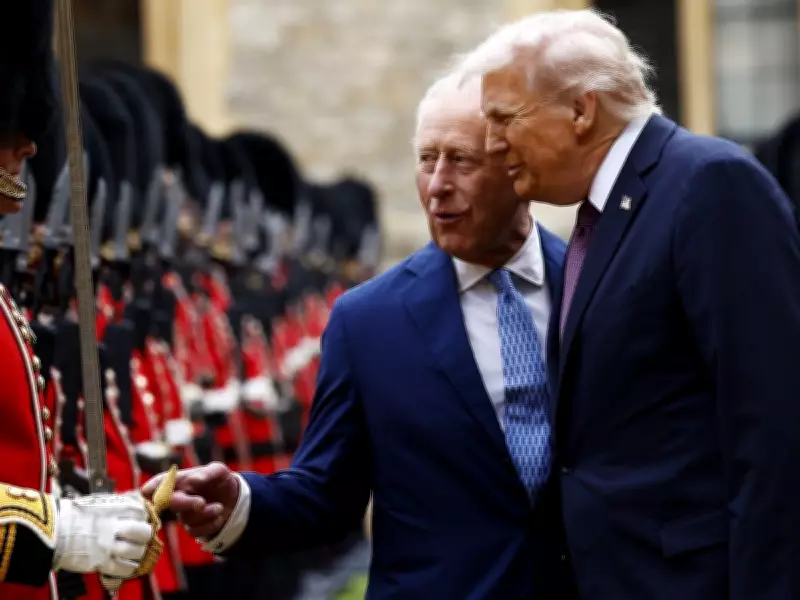
Hardman noted that Trump took pride in his diplomatic visits, including a trip to England just months before their interview, highlighting the former president's engagement with international affairs even as he grappled with the realities of Canadian sovereignty.