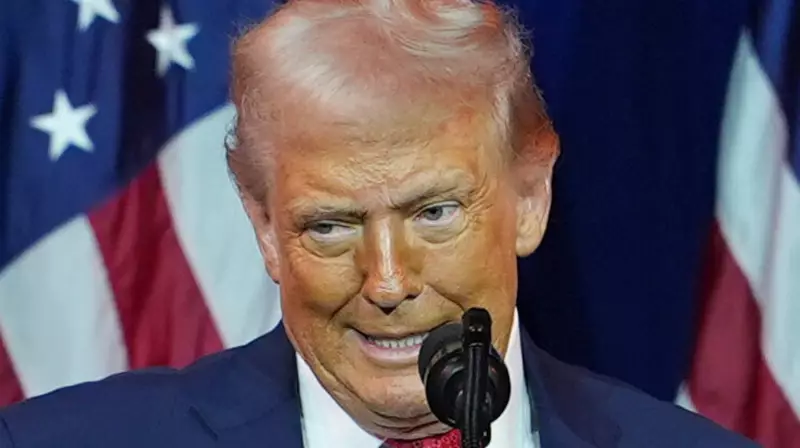
Former U.S. President Donald Trump has ignited a fresh wave of controversy with comments suggesting he sees few, if any, external constraints on his power in global affairs. The remarks, made during an interview published on Thursday, have drawn swift condemnation from critics who label his views as authoritarian.
The Controversial Interview and Key Claims
In a conversation with The New York Times, Trump was questioned about potential limits on his actions on the world stage. This discussion followed events like the U.S. military operation that captured Venezuelan President Nicolás Maduro and renewed talk from his administration about the United States potentially acquiring Greenland.
When asked about constraints, Trump pointed inward for the answer. "Yeah, there is one thing," he stated. "My own morality. My own mind. It's the only thing that can stop me." He further elaborated by dismissing the relevance of established global frameworks, adding, "I don't need international law. I'm not looking to hurt people."

While he briefly acknowledged that the U.S. is generally expected to follow international rules, he immediately qualified that statement by saying it "depends what your definition of international law is."
Immediate Backlash and Accusations of Fascism
The reaction from critics and former officials was swift and severe, primarily unfolding on social media platforms.
Zeteo editor Mehdi Hasan offered a blunt assessment, writing that Trump's response is "what dictators say." The criticism also came from within Trump's own past administration. Miles Taylor, a former Homeland Security official during Trump's first term who authored the famous 2018 "anonymous" essay, said the comments revealed "the mind of a fascist."
Other commentators amplified these concerns, arguing that Trump is "a man with no morals so we're all in trouble" and that "there are no limits since he has no morality." A recurring theme was the danger of his perceived self-belief, with one critic noting Trump "thinks his authority is absolute" and that this mindset alone is "disqualifying for the President."
Broader Implications for Global Norms
This incident is not an isolated one but part of a persistent pattern where Trump has challenged multilateral institutions and treaty obligations. His latest remarks strike at the heart of the post-World War II international order, which is built on a system of treaties, alliances, and shared rules.
By explicitly stating that his personal judgment supersedes international law, Trump presents a vision of American power that is unilateral and unrestrained by traditional diplomatic or legal agreements. This philosophy raises profound questions for allies and adversaries alike about the future stability and predictability of U.S. foreign policy, should he return to office.
The outrage underscores a deep domestic and international divide over the nature of presidential power and America's role in the world, setting the stage for continued debate as the political landscape evolves.